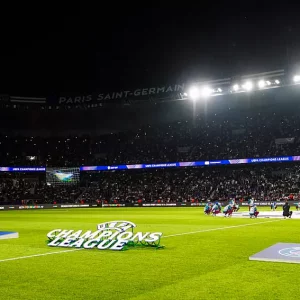

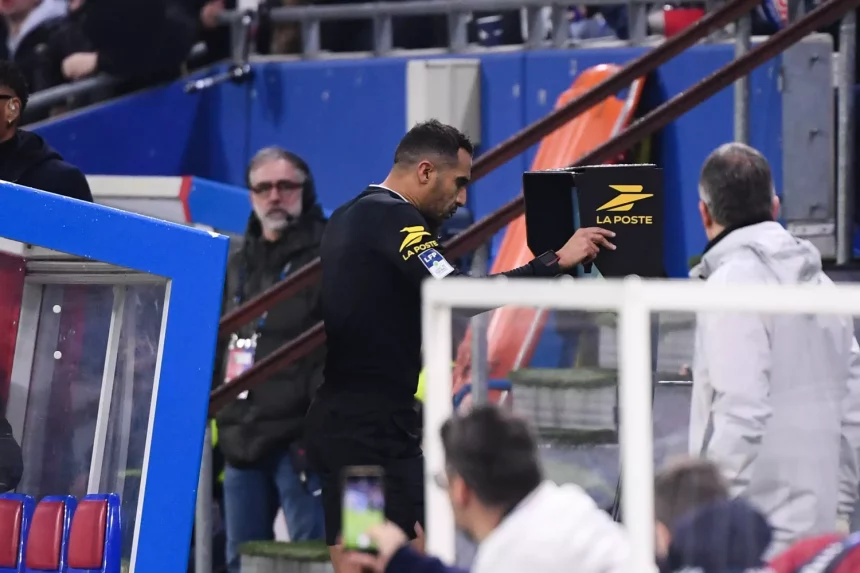
For several years now, VAR (Video Assistant Referee) has been a fixture in football. It still sparks debate, with some decisions remaining incomprehensible (like during the Monaco/PSG match last Saturday), but it has also corrected numerous errors. According to Talksport and journalist Ben Jacobs, the aim now is to cover a wider range of situations.
VAR on corners for the World Cup.
FIFA’s proposal for reviews on corners was rejected at October’s International Football Association Board (IFAB) meeting, but world football’s governing body have decided to press ahead with the idea at the World Cup this summer.
The English Football Association are understood to be against the proposed change, and contrary to Colina’s belief, fear it will slow down the match down, take power away from on-field officials and eventually lead to other parts of the game going to VAR, including free-kicks and throw-ins.
The second yellow cards are expected.
However, there is agreement from most leagues and clubs that another proposal, the review of second yellow cards, should be part of VAR’s powers. That change that is expected to come into force from next season.
One of the challenges with policing corners from the VAR room is installing cameras in the correct places to get a clear view. FIFA are confident this is feasible at the 2026 World Cup, but it may provide more difficult if the change is implemented for domestic games.
It’s expected that these additions will spark further debate about VAR, which hasn’t yet achieved universal acceptance. There are still some highly questionable decisions made by referees, leading some to argue that video replay isn’t a solution. This is somewhat unfair, however, as many situations are corrected, preventing significant frustration.
The reluctance regarding the slowing of the game is easily understood. Decisions are sometimes excruciatingly long. With more situations reviewed by video, there’s a risk of the game becoming more fragmented. This is the main area of focus. At least for corners, there’s no real interpretation involved, unlike with some fouls. The ball is touched by one player or another. This can facilitate a quick analysis, which doesn’t even require the referee to consult the screen.
As for second yellow cards, adding them seems quite logical. It can be frustrating knowing that the only option is a straight red card. Even though there’s still the risk of a slowdown in the game. Injustice is always hard to accept. In any case, work needs to be done on the timing, without forgetting to be consistent. A final point that’s too often overlooked.