

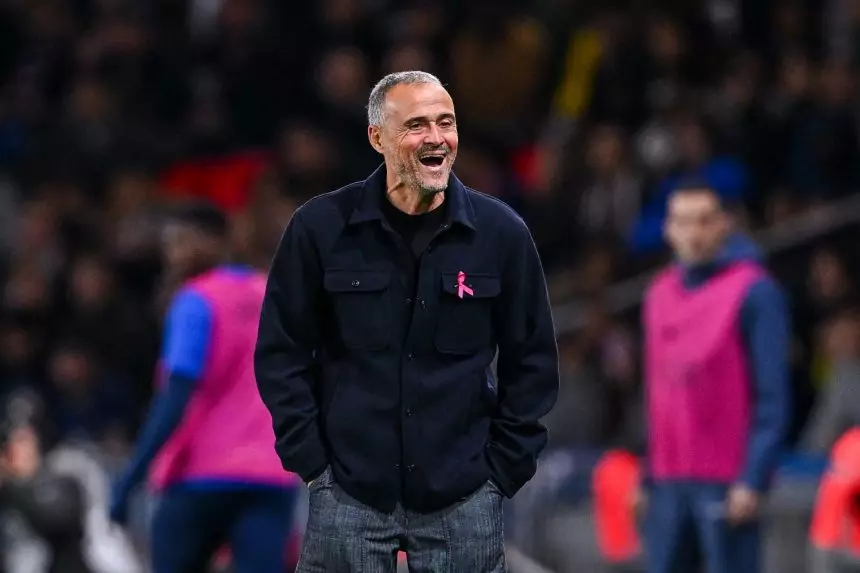
PSG is a club that loves numbers… but truly values them only when they tell a story. On December 17, 2025, in Doha, Luis Enrique delivered a perfect one: another trophy, a tense final snatched against Flamengo (1-1, 2-1 on penalties), and that symbolic milestone that pushes a coach into a different category — his 100th victory on the Parisian bench. In Paris, there have been coaches who win a lot, coaches who last, coaches who charm. Rarer still are those who change the club’s status. And if we set aside the noise, stylistic preferences, and factional debates, one question naturally arises: where should Luis Enrique be placed in PSG’s history, between the raw efficiency of the major figures of the QSI era and the “foundational” legacy of legendary managers?
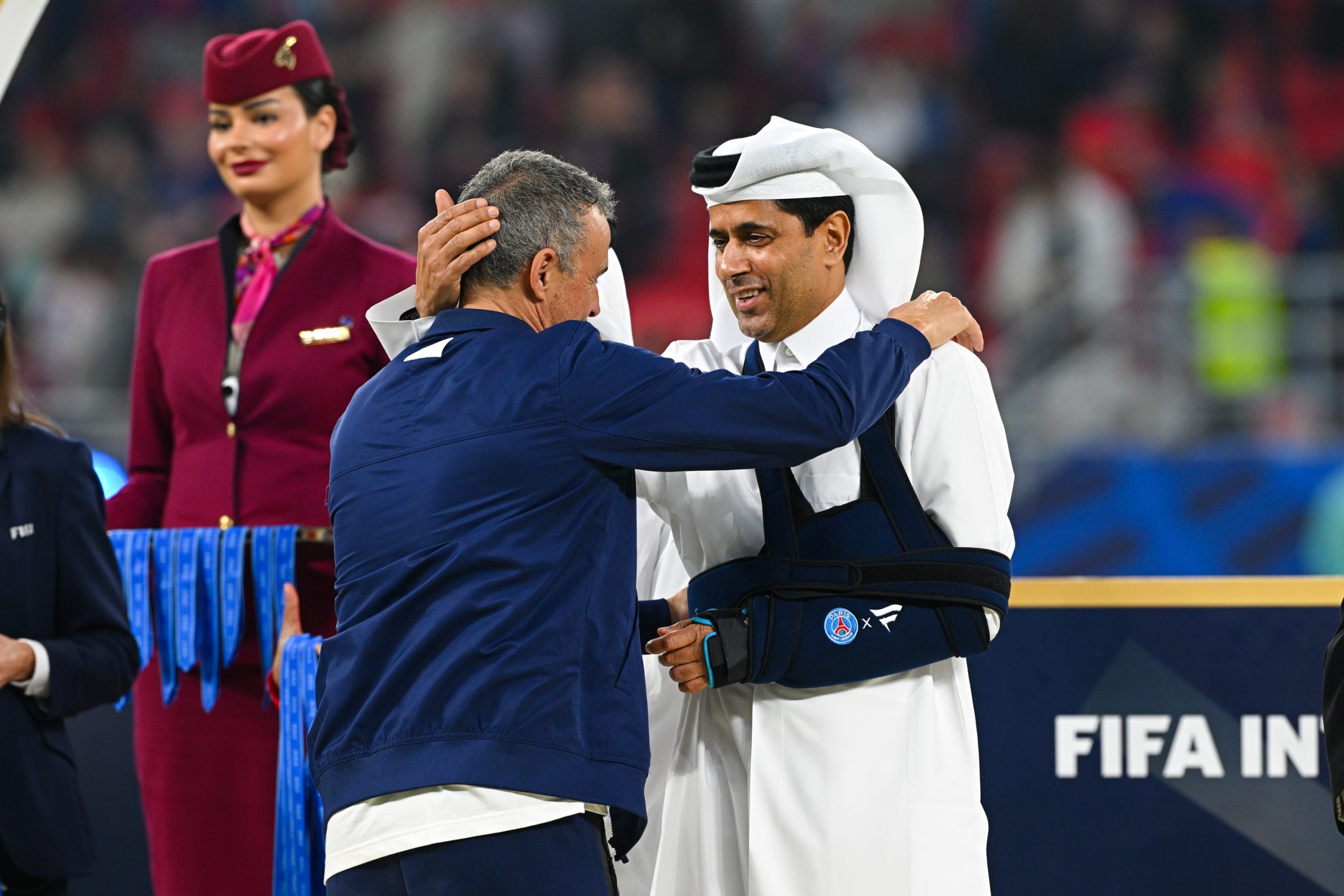
Luis Enrique in PSG history: the coach who transformed a “project” into an empire (and who just notched his 100th victory)
PSG has had winning coaches, “transitional” coaches, “star” coaches, and “idea” coaches. But few leave a clear, legible, and undeniable mark. Luis Enrique is now establishing himself in this category, not because he has good communication skills or an already prestigious CV before joining Paris, but because the PSG of 2025 has transformed from a national powerhouse into an international benchmark.
And on December 17, 2025, the stage was set to etch the story into history: victory in the Intercontinental Cup final against Flamengo (1-1, 2-1 on penalties), the sixth trophy of the calendar year, and above all, a symbolic milestone that resonates with everyone, even those who dislike tactical debates: Luis Enrique’s 100th victory on the PSG bench.
You may or may not like his style. You may or may not debate his choices. But there’s no more pretending: his time at the helm is already a major chapter in the club’s history.
December 17, 2025: a world title, a tense match, a coach who wins “even when it’s ugly.”
- PSG defeated Flamengo in a nail-biting match. Final score: 1-1 after extra time, then a 2-1 Parisian victory on penalties.
- Paris opened the scoring through Kvaratskhelia (38th minute).
- Flamengo equalized from the penalty spot, converted by Jorginho.
- And the penalty shootout became the episode where PSG went from “favorite” to “killer”: Matvey Safonov delivered a phenomenal performance, saving four penalties.
It wasn’t the most brilliant final of the year. But that’s precisely why it matters in the “Luis Enrique in PSG history” narrative. Great teams aren’t great because they win when everything is effortless: they’re great because they know how to win when things get tough, when they resist, when it comes down to heart and composure.
And this trophy isn’t an isolated incident: it seals off an extraordinary 2025.
The 2025 Sextuple: The Season Paris Ceased Its “Rich Club” and Became “A Benchmark Club”
PSG’s 2025 calendar year reads like a collection of stamps on a passport of dominance:
- Ligue 1
- Coupe de France
- Trophée des Champions
- Champions League
- UEFA Super Cup
- Intercontinental Cup (against Flamengo, December 17)
Six titles in a single calendar year is extremely rare. And in a club like Paris, long judged more on its European performance than its domestic success, it changes the internal hierarchy among coaches. Because some coaches have had very strong domestic seasons. Very few have had a season that puts them on the world map followed by stability.
The most important thing here is the meaning of the word “history.” PSG’s history isn’t just about accumulating trophies: it’s about changing status. Luis Enrique is associated with this transformation.
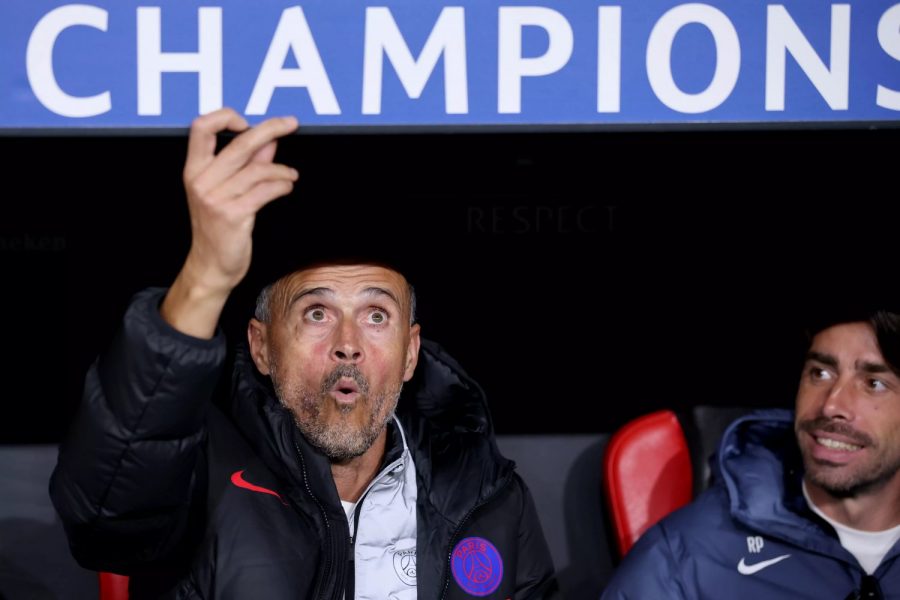
The numbers: 100 wins, 142 matches, and a ratio that puts him very high (without cheating).
Let’s be clear: numbers are a tool, not a slogan.
As of December 17, 2025, Luis Enrique’s record includes:
- 142 matches managed at PSG
- 100 wins
- 23 draws
- 19 losses
- 2.27 points per match
- ≈ 70.4% win rate (100/142)
A useful methodological point: depending on the database, a match won on penalties can be recorded as a “draw” based on the score (after extra time) or as a “win” in the “qualification result” summary. Here, referring to the “100th win” refers to the summary that counts the final result of the competition (including penalty shootouts).
This ratio, in Paris, is very high. But the story also unfolds in comparison, and that’s where it gets interesting.
Comparison with “legendary” coaches: who dominated in terms of win-per-game ratio, who made history?
There’s a tendency to conflate two debates:
“Who wins most often?”, “Who changed the club’s destiny?”. The two don’t always yield the same top three.
Here is a summary table of the major coaches (all competitions, PSG records):
Coach Matches Wins Draws Losses Win Percentage (approx.) Points/Match
- Unai Emery 114 matches, 87 wins, 15 draws, and 12 losses ~76% 2.42 points per match
- Thomas Tuchel 127 matches, 96 wins, 11 draws, and 20 losses ~76% 2.35 points per match
- Laurent Blanc 173 matches, 126 wins, 31 draws, and 16 losses ~73% 2.36 points per match
- Luis Enrique 142 matches, 100 wins, 23 draws, and 19 losses ~70% 2.27 points per match
- Luis Fernandez (2 stints) 244 matches, 129 wins, 56 Draws and 59 losses, ~53%, 1.65 points per match
Honest reading: Luis Enrique isn’t number one in terms of pure win rate. Emery and Tuchel have better percentages. Blanc has a huge volume of wins with a very high return. So if we reduce the debate to “who won the most often,” Luis Enrique doesn’t dominate.
Except that… PSG doesn’t rank its coaches solely on win rate. The criterion that changes everything: the historical significance of titles. In Paris, the crucial question has long been: “OK for Ligue 1, but what about Europe?”
And that’s where Luis Enrique stands out in the collective memory: he’s the coach of a period when Paris established itself as a world-class club and added trophies that carry a different kind of symbolic weight.
This is the point where we need to be realistic: you can have a 75% win rate and still be considered a “very good PSG coach.” Or you can have a slightly lower ratio… and become a “historic coach” because the club crossed a boundary that no one had crossed before. Luis Enrique falls into this second category.
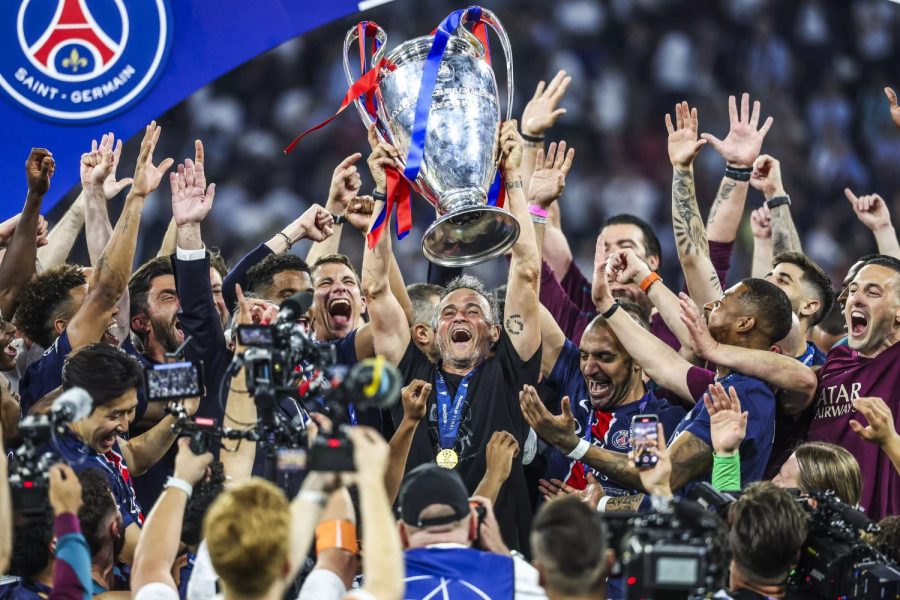
What he changed: Luis Enrique’s imprint, beyond the trophies
- Trophies are the surface. The imprint is the underlying philosophy. A playing identity (that doesn’t depend on a single man).
- Luis Enrique’s PSG has one obsession: the collective as the architecture, not the decoration. This doesn’t mean Paris no longer has stars. It means that the stars must fit within a framework. And historically, this is where Paris has sometimes stumbled.
- The result: PSG often appears more of a “team,” more stable, more consistent in its effort. It can win by imposing its tempo… and it can also survive when the match becomes a battle of attrition.
- A culture of high standards (and sometimes frustration)
- Critical thinking is essential: this PSG can also be frustrating. When you constantly strive for control, you open yourself up to two classic criticisms:
- too many “clean” phases of play that aren’t incisive enough,
- a feeling of sterile domination when the opponent defends deep and Paris lacks variety.
And this is where Luis Enrique’s game is also on display: his PSG has proven it can be lethal (especially in big matches), but there are still games where the machine “plays well” without punishing quickly enough. It’s not a fatal flaw, it’s the price of a demanding style, but it’s an area for continuous improvement.
So, where exactly does he stand in PSG’s history?
Today, we can say without exaggeration:
Statistically, Luis Enrique is already among the very best QSI coaches, even if some have had a higher record. Historically, he has an advantage that history remembers above all else: a period when Paris established itself at the top of the world stage and amassed major titles, including trophies of international stature.
Symbolically, reaching 100 wins on the evening of a World Cup final (Flamengo) reinforces a simple idea: this PSG doesn’t win “by accident.” It wins by habit. This nuance is important because it’s healthy: his legend can still grow. If he continues on this trajectory, he can climb very high in the longevity rankings, approach the most experienced coaches… and definitively cement his status as a “benchmark coach” in the PSG saga.
But even if it all ended tomorrow (a hypothetical scenario), one fact would remain: he has already done enough to be ranked among the truly influential coaches.
In conclusion: Luis Enrique isn’t just a winning coach, he’s a founding one.
PSG has always been a club of excess: excessive ambition, excessive expectations, excessive criticism. In this arena, a coach doesn’t survive on elegance alone. He survives on results. On December 17, 2025, Luis Enrique added further proof: a World Cup trophy against Flamengo, after a tense match, and a 100th victory that elevates his tenure from “very good” to “historic.”
His win-loss ratio doesn’t surpass all his predecessors. His style isn’t perfect. But PSG’s history has never demanded a perfect coach. It has demanded a decisive coach. And today, Luis Enrique ticks that box with almost mathematical certainty.


