

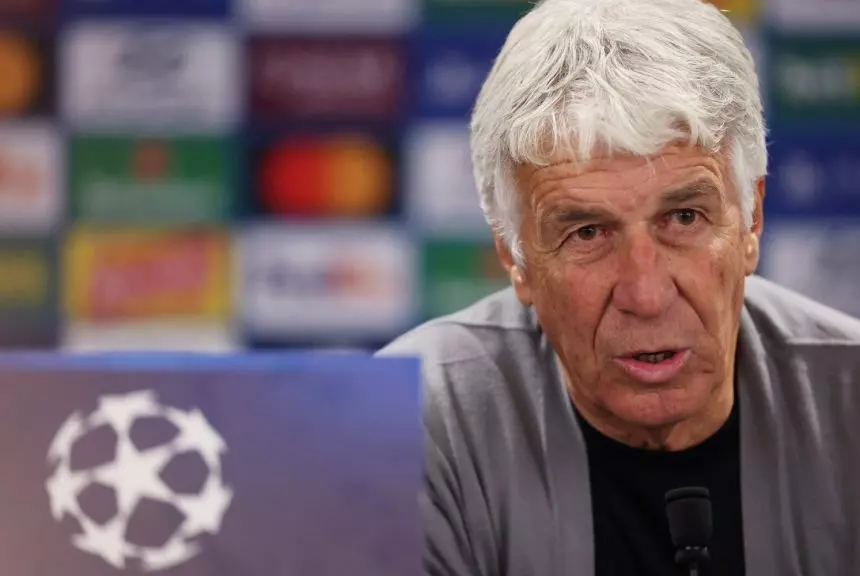
This Wednesday at 9 p.m. (CET), Paris Saint-Germain (1st) will face AS Roma (20th) at the Parc des Princes as part of the 5th matchday of the 2026-2027 Champions League league phase. In a press conference, Roma coach Gian Piero Gasperini spoke about this encounter and his Parisian opponents.
Gasperini: “The credit for this team’s success doesn’t rest on any single player.”
“The credit for this team’s success doesn’t rest on any single player. It is a team. Over the years, PSG has had some truly great players, yet failed to achieve the expected results—at least in Europe. They only began to see those results once Luis Enrique left his mark—not just on an individual level (though the players are, admittedly, all of a very high caliber), but, more importantly, on a collective level.
This is a team that knows how to compensate for the absence of highly talented players through its collective organization. In any case, those who step in to replace them are of undeniable quality.”
Losing players as creative as Doué and Kvaratskhelia is, of course, a major blow. But PSG’s greatest strength now lies in its ability to redistribute responsibilities. Paris does not necessarily need to find players capable of exactly replicating the performances of those two attackers.
Offensive mobility, positional rotation, and the involvement of the midfielders create multiple sources of danger. This is also what makes preparing for a match against Paris particularly complex for an opposing coach. The profiles may change, but the principles of play remain the same. Furthermore, absences can serve as a fantastic opportunity for other players to reach a new level.
Gasperini: “Luis Enrique’s work is extraordinary”
“Luis Enrique’s work is extraordinary; I’ve seen many teams win without ever leaving a lasting mark. What he has achieved throughout his career—notably at Barcelona, and now here at PSG—is remarkable. It’s easy to point out that PSG has great players, but, above all, PSG is a team.
I believe that is the finest compliment one could pay a side of this stature: they play as a team, which is fundamental in football. He has managed to instill this mentality in an environment that, perhaps, previously consisted only of great individual players.”
The distinction Gasperini draws between simply winning and leaving a lasting mark is particularly compelling. Beyond his two consecutive European titles, Luis Enrique has given PSG a recognizable identity. This shift in status is measured not merely by the number of trophies won, but also by how opponents now approach their encounters with the Parisian side.
Perhaps the Spanish manager’s greatest achievement is having successfully used collective play to elevate individual talents, rather than letting the two come into conflict. The technical quality of the players has never been an issue in Paris; the challenge was to forge something greater than the sum of those individual talents. Gasperini’s remarks serve as a testament to that success.


