

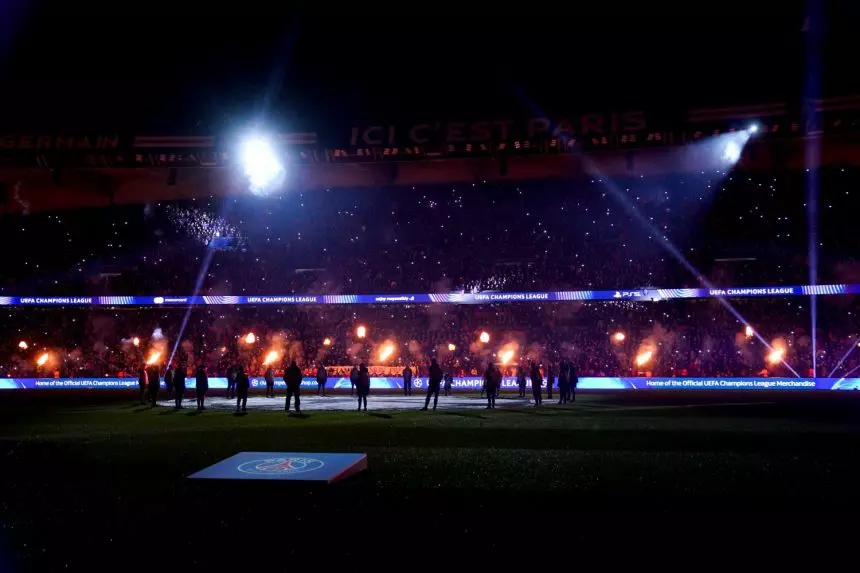
As reigning European champions, Paris Saint-Germain are nevertheless entering the Champions League knockout stage in a far from serene atmosphere. A laborious end to the group stage, a playoff against Monaco, and an atmosphere of persistent doubt have muddied the waters. Under these circumstances, discussing a possible European double seems almost incongruous. And yet, it is perhaps in this uncomfortable context that the true maturity of the 2026 version of PSG will be measured.
Defending champions, but already “called upon” to prove themselves
Being European champions offers no protection. Not from off nights, not from cycles, not from constant suspicion. PSG is discovering this for itself. In 2026, they are not entering the Champions League knockout stage carried by the euphoric momentum of their title win, but held back by a hesitant European campaign.
The end of the group stage left a clouded impression. Insufficient results for direct qualification, sometimes disjointed performances, intermittent control. Not a collapse, but enough inconsistencies to bring the club back to a harsh reality: the status of defending champion offers no automatic advantage.
Very quickly, the debate shifted. From the pitch to doubt. From the game to distrust. As if PSG, European champions for only a few months, already had to prove they still deserved to be there.
The playoffs against Monaco, a high-stakes test
The draw left no room for comfort. The playoffs against AS Monaco immediately created a heavy, almost paradoxical atmosphere: an all-French duel for access to the round of 16, with no tactical surprises.
Monaco knows PSG. PSG knows Monaco. Strengths, weaknesses, habits. Everything is known. These matches will be decided neither by instinct nor by the element of surprise, but by the ability to live up to expectations under pressure.
These playoffs are coming earlier than expected, in an already packed schedule, with no room for error. It’s not ideal for a reigning champion. But it’s a real test.
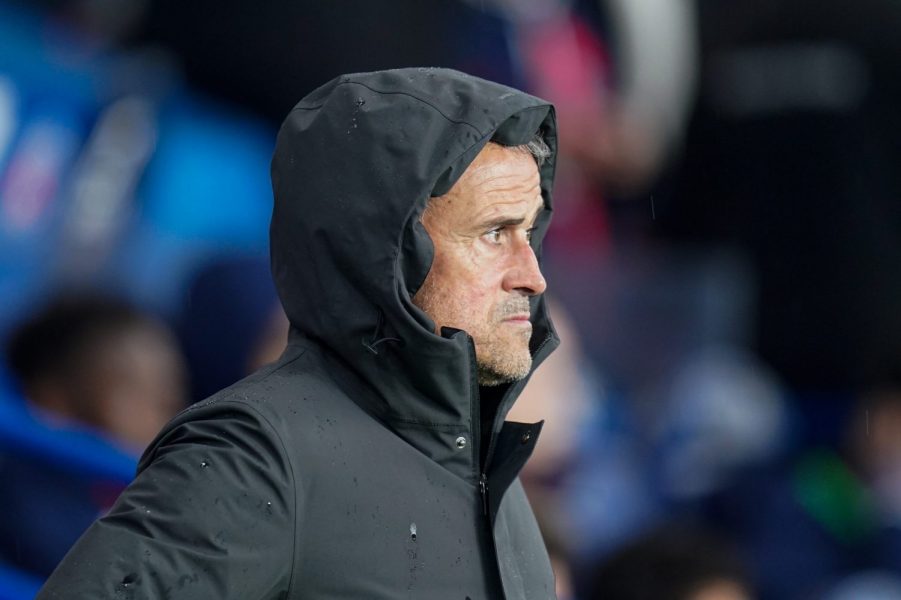
A fragile champion hides behind their past. A strong champion accepts the challenge. That, at least, is Luis Enrique’s message.
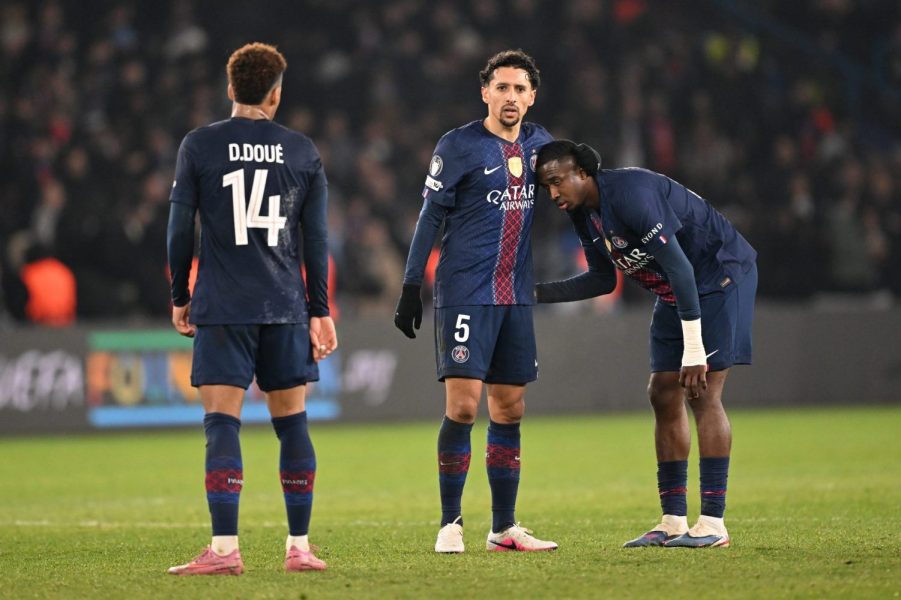
A Group Stage That Fuels Skepticism
Let’s be clear: the doubts didn’t come out of nowhere. PSG has been a cause for concern. Less because of the results than because of the way they’ve performed. A team that was sometimes less incisive, less dominant in key areas, less consistent in its intensity.
Some matches left an impression of sterile control. Others showed a team capable of raising its level, then falling back. This yo-yo effect has fueled harsh media commentary and unease among some fans, who have grown accustomed to seeing PSG dominate in recent months.
But recent Champions League history reminds us of an uncomfortable truth: linear paths are rare. Several finalists or winners have gone through a gray area, a period of uncertainty, before fully revealing themselves in the knockout stages.
A Less Flamboyant, But More Structured PSG in 2026
This PSG is no longer a team dependent on a single moment of inspiration. The European triumph wasn’t built on a series of miracles, but on a solid collective structure, a clear playing style, and masterful management of periods of pressure.
The squad is designed for longevity. Responsibilities are shared. Roles are clearly defined. This team knows how to win without crushing opponents, how to suffer without panicking, how to bide its time without giving up. These are all essential qualities when the Champions League enters its most brutal phase.
The continuity of the project is a major asset. The framework is stable, embodied by Luis Enrique, whose main strength lies in the clarity of his principles. Even when everything isn’t working perfectly, PSG knows what it’s trying to achieve. And this clarity becomes invaluable when the pressure mounts.
The real danger for the reigning champions is mental.
The trap isn’t always overconfidence. Sometimes it’s the opposite: restraint, the fear of making mistakes after reaching the pinnacle. This post-victory “hangover” doesn’t cause a sudden collapse, but rather a slight, almost imperceptible dip in intensity.
Added to this is an implacable reality: PSG can no longer afford any errors. Every match is a final in anticipation. Every poor performance is interpreted as a symptom. The champion no longer benefits from the doubt; it becomes the target.
Tactically, Europe is adapting. PSG is being studied, dissected, and its performance is being watched. It will have to adjust its responses without abandoning its identity, evolving without losing focus.
A double is a possible consequence, never a stated objective.
In this context, talking about a European double might seem premature. Almost inappropriate. And yet, the question deserves to be asked, provided it is phrased correctly.
A double cannot be decreed. It cannot be claimed. It is built through discretion, consistency, and the ability to survive moments of doubt. PSG has no interest in making it a public pronouncement. European history shows that this type of declared ambition is often counterproductive.
On the other hand, it is now legitimate to consider this possibility as a credible goal, if and only if the club accepts the intermediate stages. The playoffs. The pressure. The criticism. The imperfect matches.
If PSG emerges from this uncomfortable zone, if it remains true to its principles when everything is shaky, if it is still standing in April, then the question of the double will cease to be theoretical. It will impose itself.
Defending a European title does not begin in the semi-finals. It sometimes begins with doubt, tension, and maximum demands. PSG is exactly where it is.


