

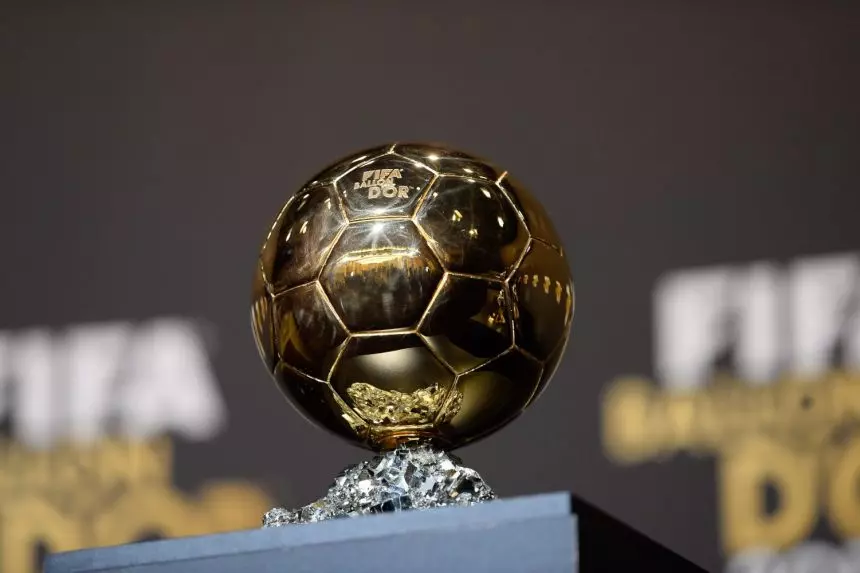
In the 2026 Ballon d’Or rankings, Vitinha (26) placed 14th and João Neves (22) 19th, according to France Football. For Paris Saint-Germain, this ranking raises a question that goes beyond mere personal preference: are we capable of appreciating all forms of talent, or only those that are highlighted in slow-motion replays?
Decisive—but at what stage of the play?
A goal changes the score. It encapsulates tension, relief, and a level of technical difficulty that would be absurd to downplay. No one is suggesting that one should apologize for admiring forwards. Yet, there is a leap in logic between acknowledging their excellence and assuming that it should naturally outrank all other types of contribution. The criteria prioritize individual performances—specifically those that are decisive and eye-catching—but they do not state that a play begins only with the final pass.
Breaking through a high press can set everything else in motion. Cutting off a passing lane can prevent a scoring chance before it even takes shape. A defender who anticipates perfectly doesn’t even need to make a spectacular tackle; they have solved the problem well before the moment arrives for applause. Their very effectiveness makes their intervention appear mundane. It is a curious paradox: the less a player struggles, the less their talent stands out to the naked eye.
“Indispensable”—a rather peculiar compliment.
Willian Pacho (25), Gabriel Magalhães (28), Marquinhos (32), and William Saliba (25)—all starters in the most recent European final—finished 20th, 21st, 25th, and 29th, respectively, while Declan Rice (27) came in 15th. Reaching a final does not guarantee a spot on the podium, and being nominated is certainly not an act of disrespect. There remains a habit to question: acknowledging that a player is indispensable, while simultaneously dismissing their claim to the top individual honors as a quaint, fanciful notion. Can a player be essential for winning, yet considered peripheral when it comes to identifying the “best”?
The public also tends to value what they are taught to look for.
A goal or a dribble is immediately captivating; understanding a tactical adjustment—such as a player creating space for a teammate by drawing in two opponents—requires closer attention. This discrepancy, however, is not inevitable, nor does it reflect a shortcoming on the part of the spectator. If you highlight how a midfielder pulls two defenders away to free up a teammate, their influence becomes clear; if you start the replay three passes later, that influence vanishes. The moment chosen to begin a highlight clip is, in itself, a decision about how credit is distributed.
“Hype” is fueled by curated sequences, commentary, and repetitive debate. It becomes rather convenient, then, to invoke “public taste” as a justification for the lack of recognition given to certain roles—especially since the men’s Ballon d’Or is decided by a panel of one hundred specialized journalists. Their expertise should, by definition, allow them to look beyond the most easily told narratives. Explaining why a player enables others to win is, after all, part of the job.
And what do we tell the young ones?
That a midfielder is just as important as a forward—but that they’d better score goals if they want to be considered a true benchmark? Children listen to what is said, but they also observe who is being celebrated. It’s hard to place equal value on every position during training sessions when the biggest nights in football seem to teach a different hierarchy.
Let’s show them how a well-placed pass, a piece of defensive cover, or a timely interception can change the course of a match. Through the sheer beauty of his play, Vitinha could inspire a child to want to be a midfielder—in fact, UEFA named him the best player of the 2026 final. There is plenty to talk about beyond just his attacking statistics.
Awards by position: a more ambitious approach
The door is certainly not closed: Vitinha finished third in 2025, and Rodri (30)—the 2024 winner—came in fourth this year. Luka Modrić (41) won it back in 2018. Midfielders, therefore, do not face quite the same predicament as defenders; the last defender to win the award was Fabio Cannavaro (53), all the way back in 2006. These facts mean we cannot speak of an “exclusion”—but we can certainly question the value placed on different ways of excelling.
Maintaining the Ballon d’Or while also introducing awards for defenders, midfielders, and forwards would allow for a more meaningful comparison of players based on their specific roles. Goalkeepers already have the Yashin Trophy, and goalscorers have the Gerd Müller Trophy—why stop there? While such categories would inevitably remain imperfect—a full-back’s job is not the same as a center-back’s—they would at least force a discussion about the specific qualities required for each position (and help highlight them), rather than demanding that every player present their case as if they were a center-forward.
Provided, of course, that these are treated as genuine, prestigious distinctions—given the time, the visual coverage, and the stature they deserve. Sending out a couple of extra trophies ahead of the main event wouldn’t change a thing. The goal isn’t for everyone to walk away with an award; it’s for every instance of excellence to become an event in itself—to spark discussion and inspire others. The public is capable of becoming passionate about a defender—but only if they are shown something more than just a slow-motion replay of that player’s latest mistake.