

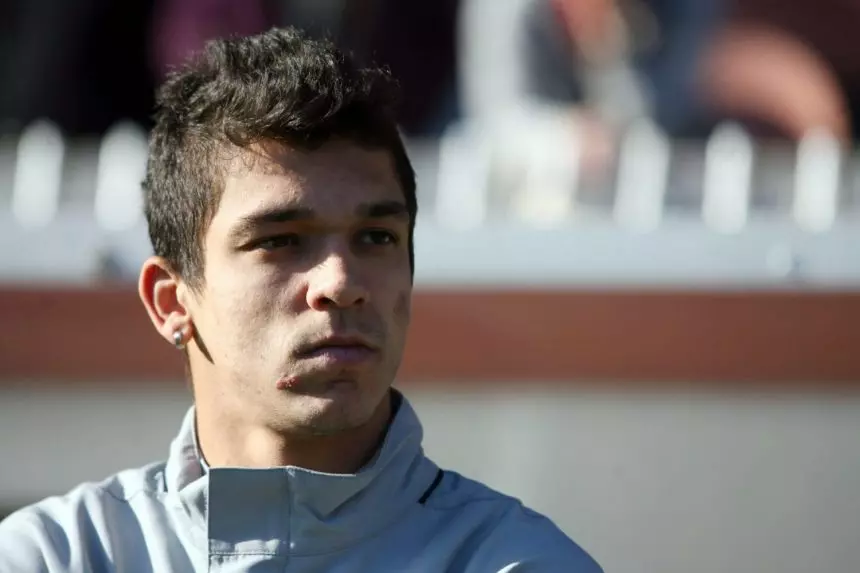
In an interview with Le Parisien, Everton Santos, the former Brazilian striker who briefly played for Paris Saint-Germain, addressed the label that still clings to him: his infamous comparison to Robinho. At 39, he insists he was simply misunderstood and points to a collective overreaction that remained far removed from a much simpler truth.
Santos: “It was a huge mistake”
“It was a huge mistake. (…) I simply meant that I was a light, fast player with similar characteristics in terms of style, not in terms of level, because Robinho was already a phenomenon. But it was amplified, it became something negative, and I paid the price,” he stated, before adding that the PSG players didn’t exactly help him either. “At the time, I had little experience and I didn’t speak the language.” (…) Today, looking back, I can say it: there were suspicious players who didn’t bother to help. I felt like I was coming in to “take someone’s place,” and that created a certain atmosphere.
Santos: “I don’t think I even got a first chance.”
I take some responsibility: I could have acted differently, brought my family, been firmer, shown more courage. But my lack of experience weighed heavily. I was a 21-year-old who didn’t feel welcome. I overheard conversations, I saw looks. It affected me. (…) I don’t think I even got a first chance. (…)
But a club that signs a 21-year-old player needs to be more careful. Part of my failure is also attributable to the club and those who worked there. There was a lack of tact, empathy, and support. And it keeps happening. We see cases like Gabriel Moscardo at PSG, Vitor Roque at Barcelona, Endrick at Real Madrid…
His story sums up something very PSG-like: every word carries a ton of weight, sometimes more than the player himself. Everton Santos explains that he wasn’t talking about “Robinho level,” but “Robinho style”—light, fast, playing characteristics, not a phenomenal status. The problem: the phrase was amplified, became a constant trial, to the point of summarizing his entire time there before he even had a real chance to establish himself.
And when a narrative takes over, it becomes stronger than the facts: the public judges, the media repeats, the label sticks. The cruellest part of his admission is the idea of a collective frenzy… followed by a collective blockage, as if the truth no longer had the right to enter the discussion.
The testimony also serves as a warning: at PSG, a young player can very quickly become entangled in a story (a word, a gesture, a match). And once the narrative takes hold, it’s no longer football, it’s mythology—except that mythology doesn’t pull any punches.


