

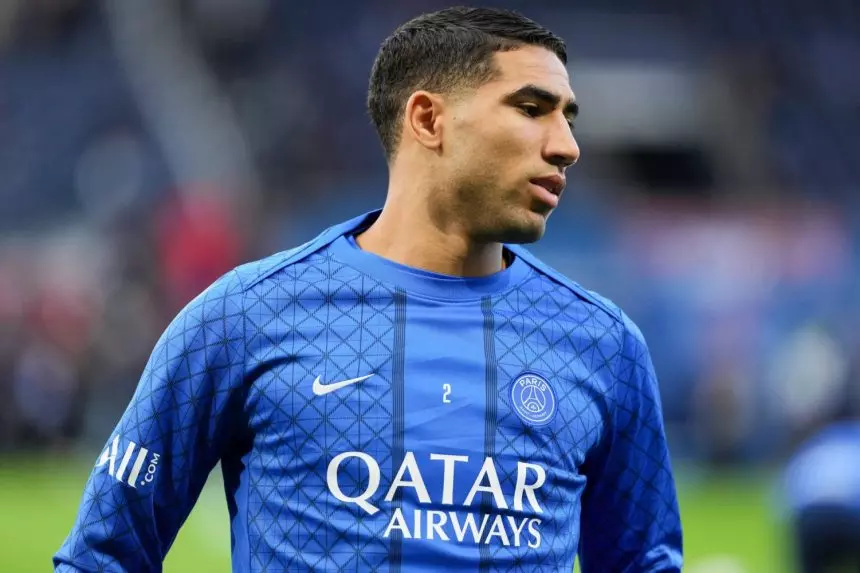
In an interview with The Bridge, Achraf Hakimi, the 27-year-old right-back for Paris Saint-Germain, offered a rare glimpse into his early days in Paris in 2021. The Moroccan described it less as a simple dip in performance and more as a perceived demotion, linked to a changing team dynamic where his role and influence had shifted.
Hakimi: “PSG’s playing style is changing.”
“My first season in Paris was very difficult. I came from Inter Milan and Dortmund; I was a different kind of full-back, one who attacked, who scored, with a team that played around me, where I was important. Then, I arrived in Paris, knowing what to expect with Neymar and Mbappé. But Messi hadn’t arrived yet. And naturally, when he arrives, PSG’s playing style changes.”
Hakimi: “The style of play is different, he’s there.”
“When I signed, I didn’t know Messi was going to arrive.” So the style of play is different, he’s there, so I can’t attack anymore, I have to stay back. I felt like a “small player.” Especially since at the same time, with Morocco, I’m an important player, so it was difficult for me to be the player I wanted to be in Paris. And then, I was heavily criticized, asked why he’s like that with the national team and not in Paris. It was tough.”
This account is valuable because it goes beyond the usual on-field analysis. Hakimi doesn’t just explain a complicated tactical adaptation; he also describes a kind of inner effacement. A player who thrived on forward runs, impact, and repetition, he was moving away from situations where his flank lived for him and with him.
In Paris, between the already established attacking hierarchy around Neymar and Kylian Mbappé and then the arrival of Lionel Messi, his role narrowed to the point where he felt he was no longer fully himself. In retrospect, this statement puts many of the criticisms of the time into perspective: the focus was primarily on his visible performance, while he was clearly experiencing a deeper loss—the loss of his freedom, his importance, and his place within the team dynamic.
This confession has real editorial value because it also reveals a flaw often invisible at the highest level: a player can simply appear less skilled, when in reality he no longer truly recognizes himself in what is being asked of him.


