


This Saturday, May 30th, Paris Saint-Germain faces Arsenal at the Puskás Arena in Budapest (kick-off at 6 pm, CET) in the 2025-2026 Champions League final. And as before every match, here’s a look at PSG’s opponent.
Arsenal’s situation –
Arsenal is obviously an iconic football club, and we won’t go into a full history. The last major turning point was the departure of Arsène Wenger in 2018, after almost 22 years at the club.
It was a difficult chapter to close. Unai Emery, the former PSG coach, tried. But he lost his job in November 2019 despite some impressive performances along the way. Mikel Arteta, the Spanish midfielder who played for PSG (2001-2002), took over to revive the project.
It hasn’t all been easy, but the Gunners’ progress is clear, particularly their ability to compete for the Premier League title. Even if the outcome has been cruel in recent years, especially in 2022-2023, as the trophy is still eluding them despite leading the table for many matches.
There’s still a second-place finish in the Premier League this season to defend, and above all, the Champions League final to play.
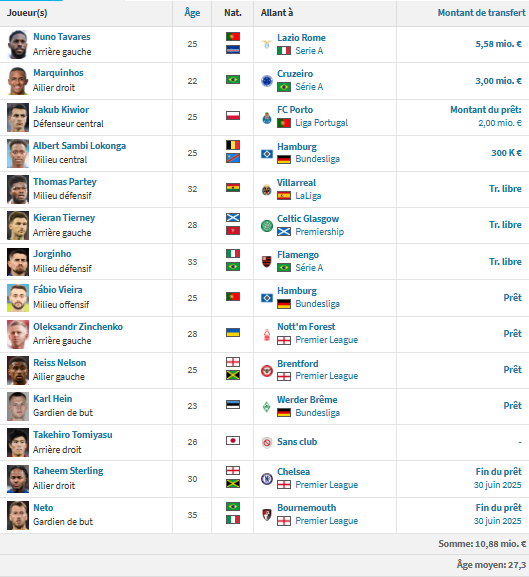
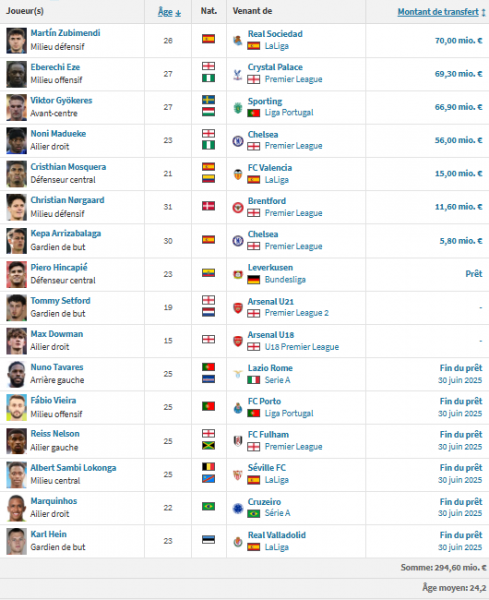
Summer Transfer Window 2025 –
Source: Transfermarkt.
Departures:
Arrivals:
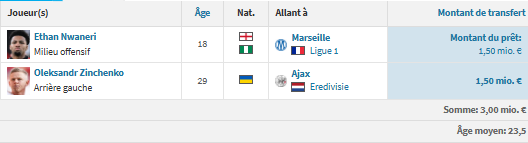
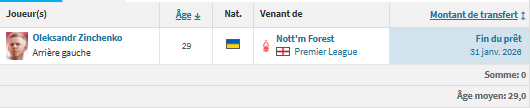
Winter Transfer Window 2025/2026 –
Source: Transfermarkt.
Departures:
Arrivals:
Key Statistics –
This season, Arsenal boasts the second-best attack in the league with 71 goals scored (Manchester City leads with 77, while Wolverhampton trails with 27), and the best defense with 27 goals conceded (Manchester City is second with 35, Burnley trails with 75).
The Gunners’ top scorer is Viktor Gyökeres (27-year-old striker), who, with 14 goals, ranks 7th in the league (Erling Haaland leads with 27 goals). Martin Ödegaard (27-year-old midfielder) and Leandro Trossard (31-year-old winger) are the club’s top assist providers with 6 assists each, placing them 5th in the Premier League (Bruno Fernandes leads with 21 assists).
Arsenal’s Last 5 Matches –
Only Arsenal’s possession is shown, and Arsenal’s shots are listed first (when data is available).
02/05/2026 (Premier League) – Arsenal/Fulham: 3-0. Playing a 4-2-3-1 formation. 54% possession. 17 shots, 8 on target, compared to 9 shots (1 on target).
05/05/2026 (Champions League) – Arsenal/Atlético Madrid: 1-0. Playing a 4-2-3-1 formation. 54% possession. 13 shots, 2 on target, compared to 5 shots (2 on target).
10/05/2026 (Premier League) – West Ham/Arsenal: 0-1. Playing a 4-3-3 formation. 66% possession. 13 shots, 2 on target, vs. 11 shots (4 on target).
May 18, 2026 (Premier League) – Arsenal/Burnley: 1-0. Playing a 4-3-3 formation. 62% possession. 13 shots, 2 on target, compared to 5 shots (0 on target).
May 24, 2026 (Premier League) – Crystal Palace/Arsenal: 1-2. Playing a 4-2-3-1 formation. 59% possession. 16 shots, 6 on target, compared to 6 shots (3 on target).
The predicted lineup according to the press in a 4-2-3-1 or 4-3-3 formation:
Gyökeres
Trossard – Odegaard – Saka
Lewis-Skelly – Rice
Calafiori – Gabriel – Saliba – Timber
Raya
ou
Trossard – Havertz – Saka
Odegaard – Lewis-Skelly – Rice
Calafiori – Gabriel – Saliba – Mosquera
Raya
Arsenal’s playing style.
Arteta employs a “control” style of play, both with and without the ball. The idea is always to apply pressure after losing possession and then control the game by taking the time to build attacks. While such a match might require some adjustments, we expect to see this approach again against PSG.
PSG will need to be particularly wary of one of the Gunners’ major strengths: set pieces. At least there are some defensive weaknesses to exploit, including some overly risky clearances. Unless, of course, Arteta opts more for long balls.
Arsenal has been less impressive this season, but of course, this team deserves respect; they can cause serious problems for anyone. Last season’s semi-final was far from easy.


