

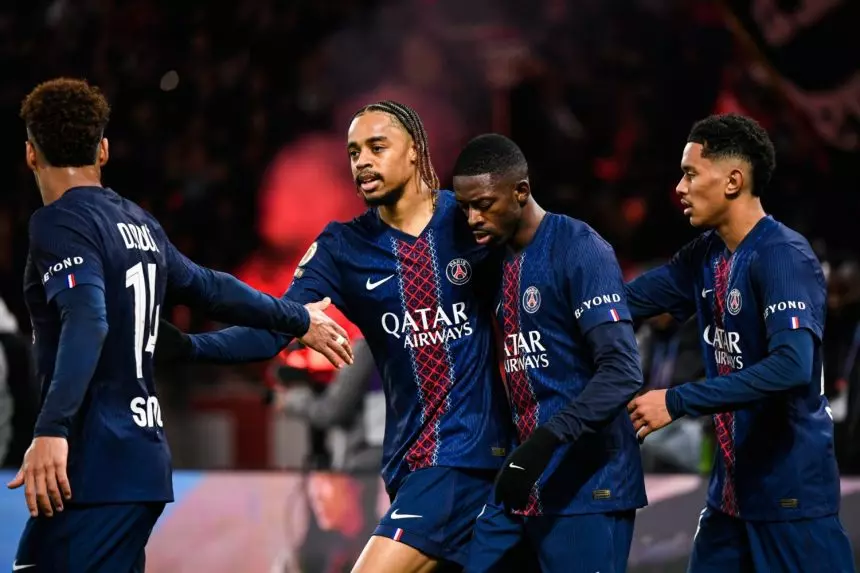
Bradley Barcola, 23, winger for Paris Saint-Germain and the French national team, savored PSG’s second European title in an interview with Téléfoot on TF1. Between celebrations, camaraderie with Ousmane Dembélé, 29, PSG striker, and World Cup dreams, the French international displayed undiminished ambition.
Barcola: “I even lost my cap!”
“It was incredible. When you win, it’s incredible in your mind. You see the reaction around you. When we arrived in Paris, it was incredible, I even lost my cap.”
“We knew we’d be under pressure in this second Champions League. Not better than the first, but incredible.”
Barcola simply describes a scene that has become almost surreal for Paris Saint-Germain: winning again, then experiencing the immense public impact on the club. His emotion also serves as a reminder that this second Champions League title doesn’t erase the first, but it propels PSG into a new dimension. The hardest part often begins after the first summit: confirming it. Paris did it.
Barcola: “It’s incredible to play with him”
Missed opportunity in the Champions League final and playing with Dembélé
“I could have done better on that play. Ousmane gave me advice. He told me to try and pass, and if he touched me, it was a red card.”
“He makes me laugh with his jokes, he’s always up to mischief, but he’s so serious on the pitch. When I saw him on the field, he was crazy. It’s incredible to play with him.”
This passage says a lot about the Parisian dressing room. Barcola takes responsibility for the missed opportunity without hiding anything, but he also emphasizes Dembélé’s influence on his development. PSG needs this kind of internal transmission: experienced players capable of guiding without stifling, and young players clear-headed enough to progress quickly. In such a competitive attack, this understanding can be crucial.
Barcola: “It’s a childhood dream”
“Aiming for the World Cup, I’m told it’s very difficult when I talk to the veterans. It’s a childhood dream, to be able to play in it, it’s going to be incredible.”
After making history with PSG, Barcola is naturally looking towards the French national team. His words remain enthusiastic, but not naive: the veterans remind him of the difficulty of a World Cup, and that’s precisely what gives weight to his ambition. For Paris, it’s also a positive sign: its young players are growing up with very high-level goals.
Barcola is no longer content with being a promising talent. He speaks like a player who has already faced finals, expectations, the details that change a play, and dreams that transcend the club. It’s exactly the kind of maturity that PSG wants to see take root.


