
At 24 years old, Paris Saint-Germain goalkeeper Lucas Chevalier is going through a delicate adaptation phase since his arrival. Speaking to Téléfoot, former PSG goalkeeper Jérôme Alonzo pointed out a lack of presence and visible authority during Chevalier’s first weeks. An observation that goes beyond what happens on the pitch and touches the very core of the position.
Alonzo: “In his first weeks, he was somewhat suffering through the game”
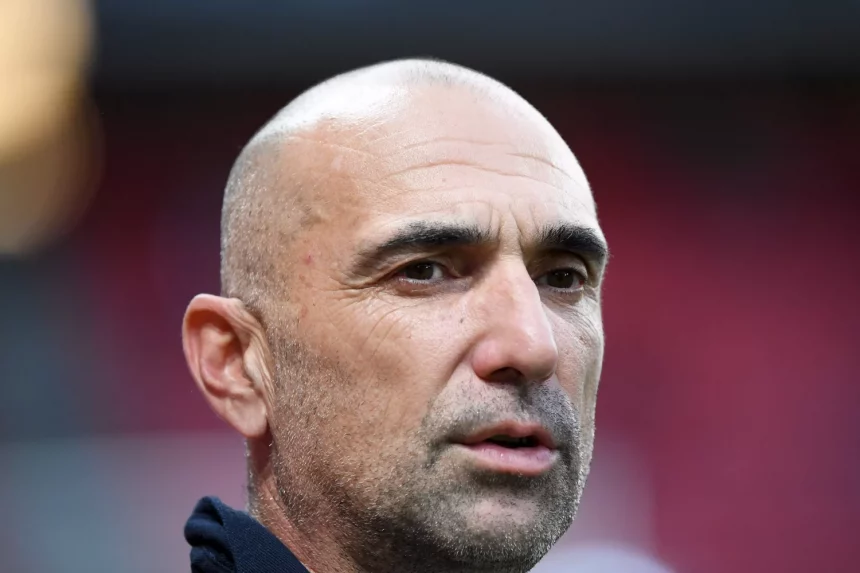
“In his first weeks, he was somewhat suffering through the game and the situation. I felt he looked small on the pitch. I thought he didn’t take up space on the field like he did at Lille, where there was sometimes a kind of magic in his actions. And then I saw him again, with a slightly harder, more mature look.”
The goalkeeper position is a psychological anomaly in modern football. Chevalier is not discovering top-level demands, but something else entirely: constant exposure. At Lille, a mistake could sometimes be absorbed by the collective. At PSG, it is amplified, frozen, replayed on a loop. The goalkeeper becomes an emotional showcase. Everything is readable: posture, gaze, gestures, breathing. Alonzo puts his finger on a key point: “taking up space.”
It’s not just about shouting or authority—it’s an inner construction. Being a goalkeeper in Paris means accepting solitude even when the team is winning, and scrutiny even when you’re barely involved. The “hard” expression seen recently is no coincidence: it’s often a sign that the mind has understood before the body. And for a goalkeeper, the mind controls everything.