

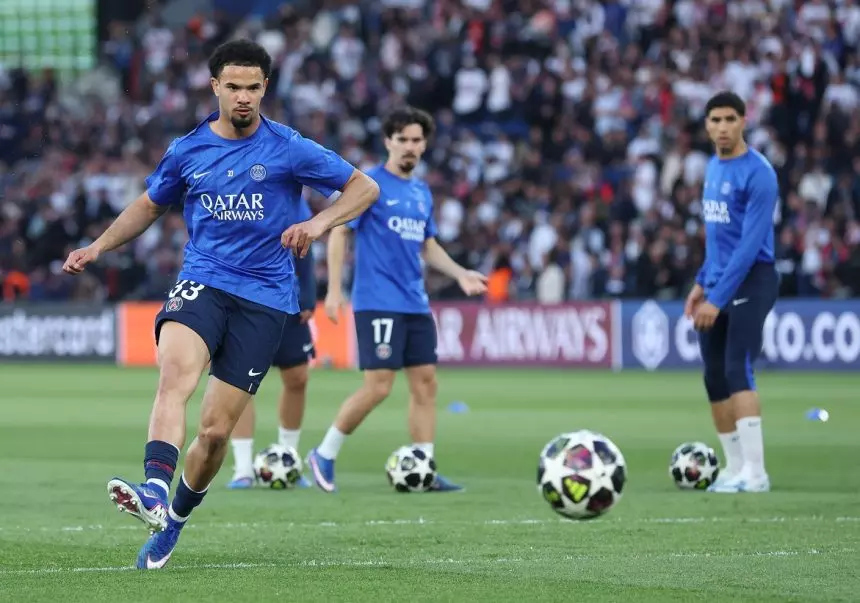
Paris Saint-Germain now has a go-to starting XI—the lineup reserved for the biggest matches and victorious finals. Yet, the 2025-2026 season also demonstrated that Luis Enrique was not managing a team limited to just eleven players. Safonov upended the established pecking order, Mayulu and Beraldo were entrusted with responsibilities in major games, and players like Zaïre-Emery and Zabarnyi saw extensive action. Paris knows its core lineup, but several players still have a genuine path to breaking into it.
The lineup used in finals does not tell the whole story of the season.
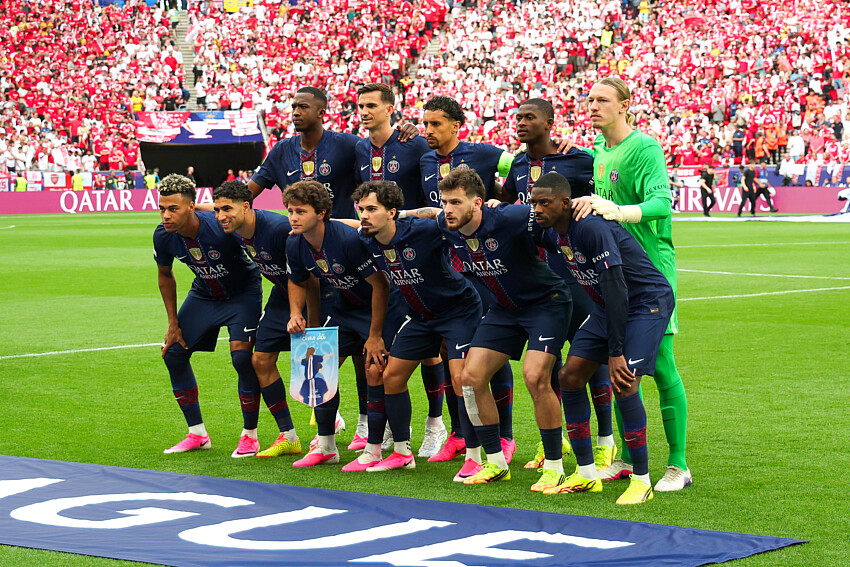
- A go-to lineup rather than an immutable one.
When all players are available, Luis Enrique’s choices appear relatively predictable. Matvey Safonov finished the season ahead of Lucas Chevalier. Achraf Hakimi, Marquinhos, Willian Pacho, and Nuno Mendes form the established defense, while Vitinha, João Neves, and Fabian Ruiz make up the preferred midfield for major fixtures.
Up front, Désiré Doué, Ousmane Dembélé, and Khvicha Kvaratskhelia hold a logical advantage, built on their performances and the chemistry developed during Paris’s biggest victories. This snapshot of the squad exists, and it would be artificial to claim that every player starts the new season on a perfectly level playing field. In such a competitive group, some have gained an edge. Yet, this lead is neither a lifetime contract nor a sentence for those starting further back.
The 2025-2026 season demonstrated the limitations of judging the squad solely by the lineups used in finals. Dembélé—indispensable when the level of competition rose—was frequently rested in Ligue 1 matches. Meanwhile, players like Zabarnyi, Zaïre-Emery, Mayulu, Beraldo, and Barcola racked up starts and took on greater responsibilities. Paris did not operate with a “first team” that played every match and a group of substitutes tasked only with closing out games that were already won.
Luis Enrique used the league campaign as a space for competition, development, and experimentation, allowing many players to secure significant—and often high-quality—playing time. Some played extensively without being part of the go-to European starting XI; others made fewer starts in Ligue 1 yet remained the priority choices for big match nights. The hierarchy at Paris, therefore, depends as much on the specific moment, the opponent, and the tactical profile required as it does on any theoretical ranking of the squad members.
Safonov: proof that the pecking order can be overturned.
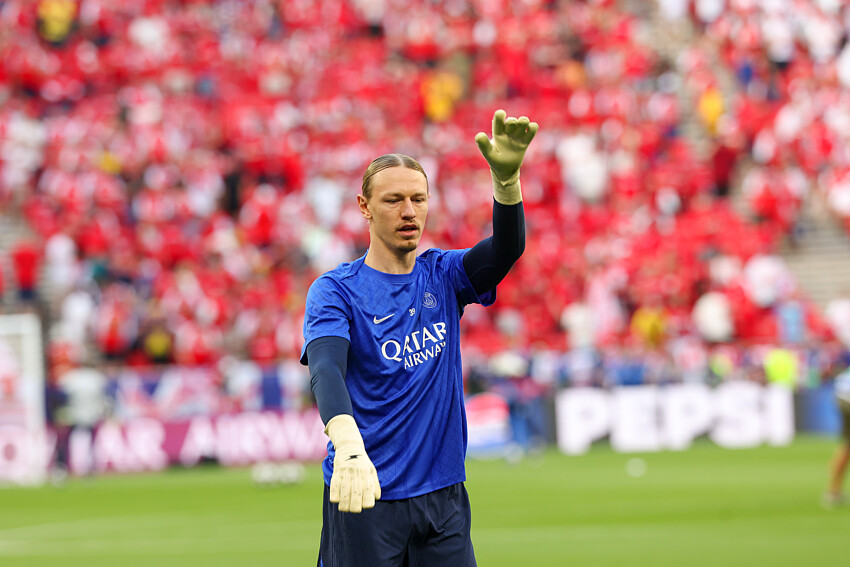
- Chevalier has lost a spot that he can still reclaim.
The competition between goalkeepers offers the best example of a truly open pecking order. Lucas Chevalier was signed to take the number-one spot and embody PSG’s future. However, Matvey Safonov seized his opportunities, gradually built confidence, and finished the season ahead of him. This shift does not mean Chevalier has lost his ability, nor that his future at PSG is already in jeopardy.
It simply shows that Luis Enrique does not indefinitely protect a status based on a transfer fee, a reputation, or the opening weeks of a season. Performance, integration into the team, and the ability to step up in crucial moments can alter the established order.
Safonov is therefore likely to start the new campaign with a genuine head start, yet Chevalier still possesses the qualities needed to reopen the debate. Above all, this competition sends a message to the rest of the squad: a spot can be won, even when the hierarchy seems set. Zabarnyi can close the gap on Marquinhos, Zaïre-Emery can return to the midfield role he played on big nights, Mayulu can turn his versatility into a key role, and Dro Fernández can accelerate his development.
Luis Enrique makes no guarantees regarding starting spots, but his approach leaves enough doors open for progress to remain meaningful. The lineup used in the finals serves as a reference point, not a fixed image.
Zaïre-Emery: the “twelfth man” naturally aiming for more.
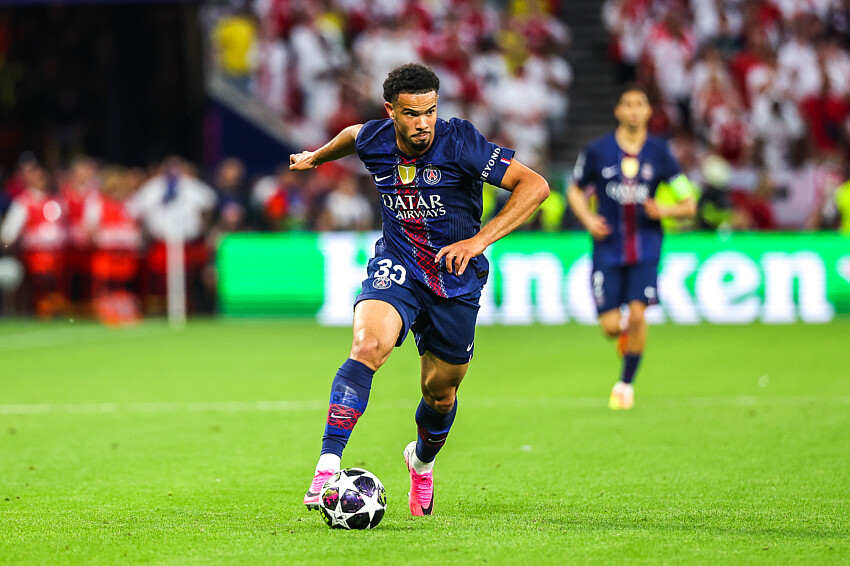
- Reliability as a strength, not a ceiling.
Warren Zaïre-Emery enjoyed a full season, playing a vast number of minutes, covering multiple positions, and stepping up for Paris during the absences of Fabian Ruiz and Achraf Hakimi. His power, work rate, and understanding of team balance make him one of Luis Enrique’s go-to options.
He can fill in for almost any midfielder without forcing the team to radically alter its setup, while also doing a job on the right flank when Hakimi needs a rest. This reliability explains why he is viewed as PSG’s “twelfth man”—not merely a convenient substitute, but the first player called upon who can slot into the side without lowering the overall standard.
Yet, when Ruiz returned and Luis Enrique had to select his midfield for the European final, Zaïre-Emery started on the bench. This decision should not necessarily be interpreted as a punishment or a sign that he has hit his ceiling; rather, it marks the next stage of his development. Warren already knows how to defend proactively, cover vast distances, and secure the team during transitions.
To secure a long-term spot in the starting midfield trio, he will need to exert more influence on the team’s playmaking—particularly when Paris faces a deep-sitting defense and must create chances in tight spaces. His challenge is to avoid being pigeonholed as the player the coach calls upon merely to cover an absence or maintain defensive stability. At his level, the goal must be to become a player around whom Luis Enrique builds the team, rather than simply one of his best backup options.
Zabarnyi, Mayulu, and Beraldo have already cleared that first hurdle.
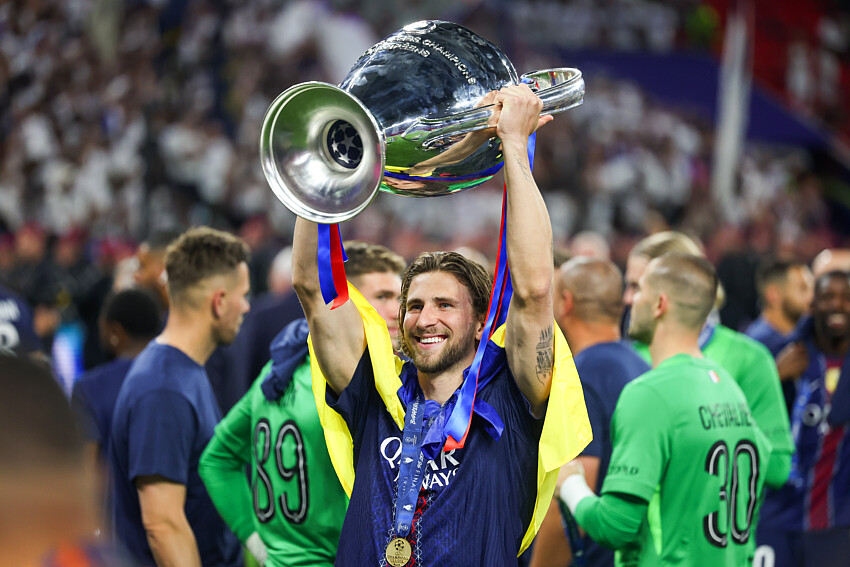
- Zabarnyi, the most direct rival.
Ilya Zabarnyi has logged significant playing time in Ligue 1 and can no longer be viewed merely as a defender brought in to give Marquinhos a breather. The final step is to translate this volume of play into a commanding presence during high-stakes matches. Marquinhos retains the edge thanks to his experience, leadership, and ability to read the game during vulnerable moments, whereas Zabarnyi still needs to improve his initial distribution and how he handles the space left behind a high-pressing Parisian defensive line. Nevertheless, his potential remains immense.
Among the players outside the starting XI, he likely has the clearest path to a permanent spot, as he doesn’t need a tactical overhaul to break into the team; he simply needs to become a well-rounded enough player for his defensive qualities to gradually eclipse the captain’s experience.
- Mayulu must turn his versatility into a defined identity.
Senny Mayulu is no longer a youngster whom Luis Enrique is just discovering or shielding. He has started major matches, played in both midfield and attack, and stepped up in demanding European fixtures. His technique, composure, and intelligent movement allow him to fill various roles without looking out of his depth. While this versatility is a major asset, it can also hinder his bid to secure a regular starting spot. Mayulu can play as a box-to-box midfielder, attacking midfielder, inverted winger, or false nine—offering him plenty of options but not automatically guaranteeing him a priority role.
The 2026–2027 season must be the time he transforms this adaptability into a genuine identity. He has the potential to become the kind of driving midfielder Paris often lacks—a player who naturally attacks the penalty area and links the midfield to the attack. He no longer needs playing time granted simply on the basis of potential; he must now make his profile indispensable.
- Beraldo, a tactical role defined along the way.
Lucas Beraldo has followed a different developmental path. His technical qualities have never really been in doubt, but his defensive limitations became more apparent when matches turned fast-paced, physical, and open. Luis Enrique chose not to pigeonhole the Brazilian in that regard, gradually deploying him in midfield—even in big games. His left foot, composure, and ability to drop back between the defenders allow PSG to alter their build-up play without needing multiple substitutions.
Beraldo possesses neither Zaïre-Emery’s engine nor João Neves’s mobility, and he is unlikely to become a classic holding midfielder capable of covering vast distances on his own. His value lies elsewhere: he can be the player who alters the team’s shape, adds solidity to the initial build-up, and offers Luis Enrique a hybrid solution. He is no longer merely a backup center-back, but a tactical experiment that is beginning to look like a genuine role.
Dro, Hernandez, Digne, and Mbaye: four different career paths.
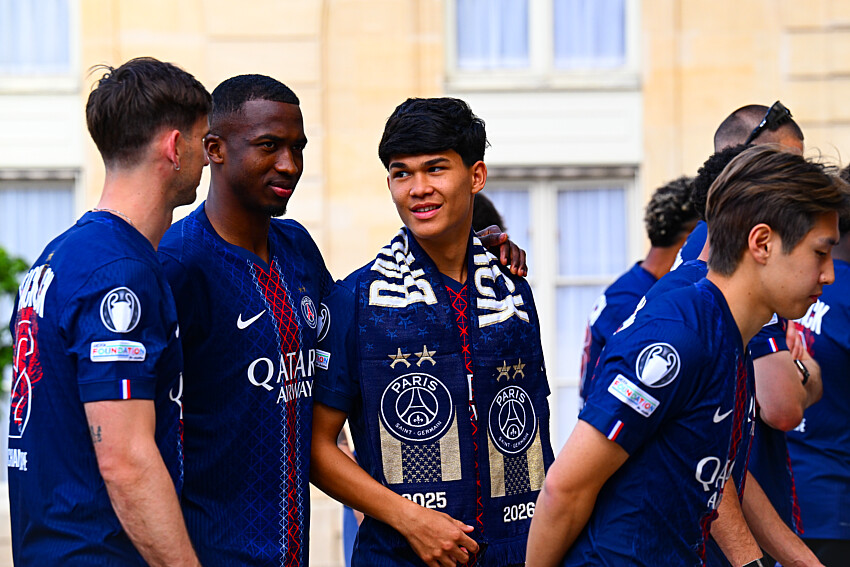
- Dro needs to identify what unique qualities he brings to the table.
Dro Fernández possesses technical quality and an understanding of tight spaces that make him particularly interesting. Luis Enrique has already given him opportunities in midfield, proving he doesn’t view him merely as a prospect for the distant future. However, he faces stiff competition, as Vitinha, João Neves, Fabián Ruiz, Zaïre-Emery, Mayulu, and likely Akliouche can all operate in areas similar to his own.
Dro will need to improve his pressing, his ability to repeat high-intensity efforts, and his resilience in duels—but above all, he must determine what he can offer that the others don’t already provide. He likely won’t be a fixed backup assigned to a specific player or position. His goal will be to become a creative option unique enough to compel Luis Enrique to carve out a specific role for him.
- Experience to safeguard the team structure.
Lucas Hernandez and Lucas Digne address much more immediate needs. Hernandez is not a typical backup: while his physical availability can be inconsistent, his quality, aggression, and experience still allow him to start big matches either centrally or at left-back. Digne represents a different kind of solution.
He arrives to offer a genuine alternative to Nuno Mendes, ensuring that the Portuguese player’s absences don’t force Luis Enrique to shuffle multiple players around. He isn’t necessarily coming to challenge the starter, but rather to protect the team’s cohesion, allow Hernandez or Pacho to remain in their natural positions, and provide a straightforward solution in an area where depth was lacking.
Ibrahim Mbaye finds himself in a more open situation. He has already logged minutes and demonstrated certain qualities, but the expected reinforcements in the attacking ranks might prompt him to leave. A departure wouldn’t necessarily mean Paris has lost faith in him; it could simply be a matter of seeking consistent playing time, as staying at the training campus isn’t always the best option when first-team appearances become too infrequent. At his age, a full season of regular football elsewhere can sometimes be more beneficial for development than sporadic substitute appearances in Europe’s strongest squad.
A transfer strategy based on profiles and roles.
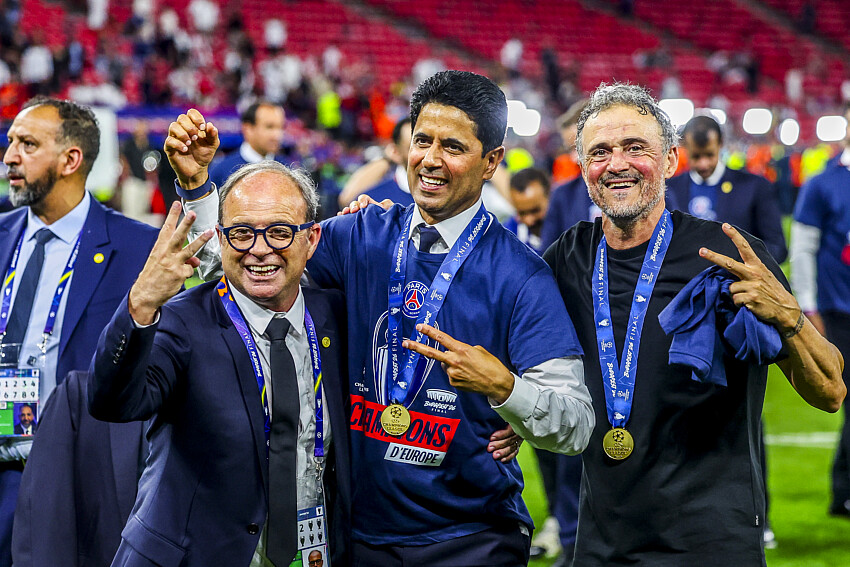
- Akliouche to replace Lee, without replicating his exact role.
Maghnes Akliouche’s anticipated arrival should primarily be viewed as a direct replacement for Kang-in Lee. Paris would regain a left-footed player capable of starting on the right, cutting inside, and contributing to the creative play—though his role could quickly evolve into something more significant. His rivalry with Désiré Doué seems natural, given that both Frenchmen prefer drifting away from the flank to get closer to the center of the action.
However, the situation won’t necessarily boil down to a head-to-head battle for a single spot. Luis Enrique specifically demands that his attackers circulate, swap positions, and abandon their starting roles whenever the movement of play requires it. Akliouche could thus allow Doué to operate more centrally without depriving Paris of a creative presence on the right, while Hakimi maintains the team’s width.
The two players can therefore be both rivals and complementary assets. Akliouche wouldn’t be signed to hug the touchline, but rather to add another dimension of movement to an already highly mobile attack. His presence would raise the bar for Doué, Mayulu, or Dro, while also giving Luis Enrique a new way to combine his creative players, rather than simply pitting them against one another for a fixed position.
- Godts as an alternative to Kvaratskhelia.
The pursuit of Mika Godts is less advanced, but his profile sheds light on Paris’s strategic thinking. The Ajax winger likes to start on the left, take on his defender, receive the ball to feet, and then cut inside. He looks more like an alternative to Kvaratskhelia than a mere carbon copy of Barcola. Kvaratskhelia obviously holds a significant advantage thanks to his experience, power, and ability to decide big matches.
Nevertheless, Godts would allow Paris to maintain an individual threat on the left flank when the Georgian isn’t playing. A good alternative doesn’t need to immediately replicate everything the starter does; it simply needs to allow the team to preserve part of its tactical identity. By targeting Godts, PSG appears to be seeking a second player capable of filling the role of an aggressive left winger—someone who can pin back the opposing full-back and disrupt the defense without waiting for a play to be fully orchestrated for him.
- A number nine who pins the defense without stagnating.
Gonçalo Ramos’s departure leaves an obvious void. Paris has lost its most natural penalty-box striker—a player capable of occupying center-backs, attacking crosses, and providing a direct outlet when fluid movement alone wasn’t enough. However, the future number nine will need to align more closely with Luis Enrique’s philosophy.
He will need to pin defenders without remaining static, play with his back to goal, link up play, press, and rotate positions with the likes of Dembélé, Doué, or Kvaratskhelia. Paris is likely not looking for a center-forward around whom the entire attack revolves, but rather a player who can provide a central presence without sacrificing the mobility that has been the team’s strength.
The new striker must therefore fulfill Ramos’s role without necessarily mirroring his style. He will need to draw in center-backs, act as a focal point, and make his presence felt in the box, all while being willing to drift out of the center to participate in team interplay. The goal is not to choose between a traditional number nine and the fluid attacking system built around Dembélé; rather, it is to have both options available—sometimes even within the same match.
The limitations of such abundant competition.
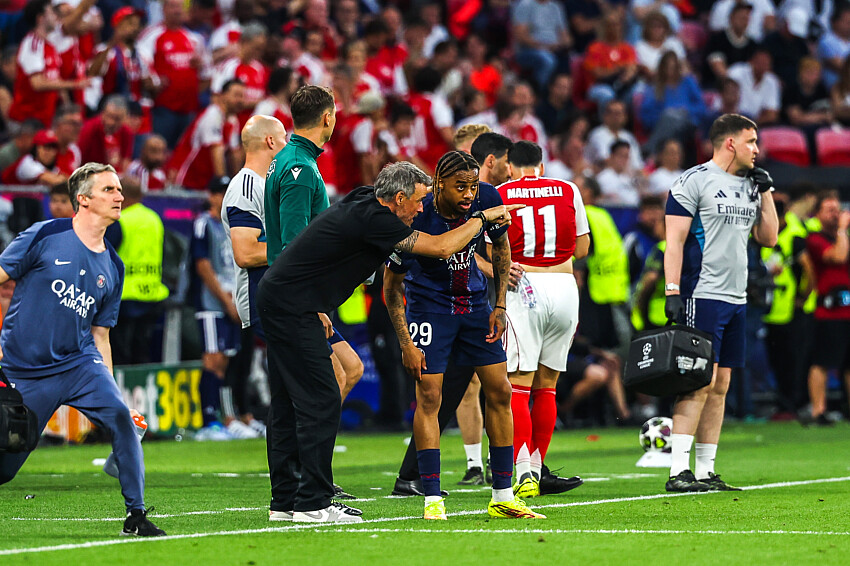
- Playing a lot does not guarantee a starting spot in a final.
The case of Bradley Barcola serves as a reminder that this philosophy also has a human limit. The winger played extensively, scored goals, and played a genuine part in the season. Yet, when the trio of Doué, Dembélé, and Kvaratskhelia was available, he did not start the most important matches. Not all minutes carry the same symbolic weight.
A player might feel fully integrated into the project for nine months, only to find—come final time—that he is not the first choice. The same applies to Zaïre-Emery; his outstanding season was not enough to secure a starting spot once Fabian Ruiz returned.
This reality does not invalidate Luis Enrique’s method, but it does highlight its main challenge. The coach must foster competition not just through playing time, but through the genuine possibility of shifting the pecking order. Safonov demonstrated that such a possibility exists, and this proof is vital for keeping the entire squad on its toes. The challenge lies in protecting key players, empowering the youth, and utilizing squad depth without letting certain players feel their role will remain limited, regardless of how well they perform over the season.
One truth, one doubt, and several paths.
- Today’s starting XI is known, but tomorrow’s is not necessarily the same.
PSG likely knows the team it would field if a final were to be played tomorrow. This stability is a strength, as it relies on established chemistry, collective confidence, and the club’s greatest historical victories. Yet, no one can guarantee that this starting XI will remain exactly the same by the spring of 2027.
Safonov has already displaced Chevalier. Zabarnyi could close the gap on Marquinhos, Zaïre-Emery could reclaim a central role, Mayulu could carve out a specific function, Beraldo could further develop his new role, and Dro could accelerate his progression. The incoming signings will do more than just increase competition: Akliouche would replace Lee’s dynamic creativity, Godts could offer an alternative to Kvaratskhelia, and the future number nine would need to pin back the opposition without stifling the attack.
Luis Enrique is thus building his squad around one certainty and one uncertainty. The certainty is that a definitive starting XI always emerges by the time finals arrive. The uncertainty is that no one yet knows which players will have managed to break into that lineup by then. So far, this approach has done more than just foster competition; it has enabled PSG to win with various lineups, empower young players, manage the workload of key veterans, and discover new solutions throughout the season.
The 2026–2027 campaign will therefore not begin with a set of starters and their respective backups, but rather with a core team and several players talented enough to believe they can still force their way in. Safonov has already taken that path. It is now up to the others to find their own way in.


