

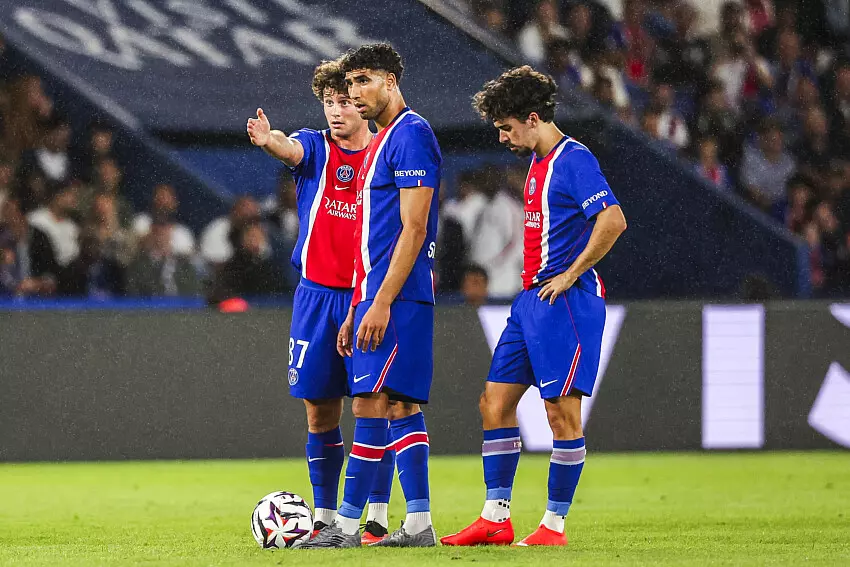
Paris Saint-Germain secured a win away at Olympique de Marseille (1-2) on Sunday. Another victory, then. Yet, it is hard to look at this start to the season and conclude that Paris is already playing exceptionally well. And ultimately, perhaps that is where our perspective on this team needs a bit of recalibration.
No, not everything is going perfectly
We certainly shouldn’t fall into the opposite trap. Just because PSG is winning, we shouldn’t feel compelled to find hidden virtues in every sloppy moment, turn every average performance into a display of character, or claim it was all part of the plan. No.
In Marseille, Paris long lacked spontaneity, precision, and—above all—that attacking fluidity that, when they are truly clicking, makes it seem as though chances create themselves. Several players are still searching for their best form, and the team functions in fits and starts rather than maintaining momentum for the full 90 minutes.
Vitinha (26) is a prime example of this. The Portuguese midfielder currently appears less sharp, less commanding, and at times, a little less precise. Yet, Luis Enrique (56) continues to rely heavily on him. And that makes perfect sense: performing below one’s peak doesn’t suddenly mean becoming a bad player.
That statement might seem incredibly obvious. In modern football, however, it evidently isn’t anymore.
The problem may also lie in the expectations PSG has instilled in us
Paris is coming off two consecutive Champions League campaigns. More importantly, the team has experienced periods where its football was so polished that the slightest dip in form now stands out starkly. Having seen this team move the ball quickly, press in unison, and create openings almost mechanically, a merely decent performance can quickly seem poor.
That is the trap. We no longer really compare PSG to its opponents—or even to what a typical team looks like in September. We compare it to the best version of PSG from the last two seasons. Of course, they lose at that particular game.
And yet, since the defeat against Monaco (1–2), Paris has beaten Slovan Bratislava (6–1), Brest (0–1), and then Marseille. Three very different matches, three victories. This doesn’t prove that everything is sorted out. It simply shows that, amidst a period where their football remains imperfect, PSG keeps moving forward.
And that is far from insignificant.
There will come a time when they need to play better.
The danger, of course, would be getting too comfortable with this narrative. You can win without being brilliant for a few weeks. Doing so for an entire season is much harder. PSG will need to regain rhythm, consistency, and—above all—that sense of control that characterized their greatest performances.
But it is still September. That is probably the detail most easily overlooked.
Just a few months ago, this squad was wrapping up a massive season. Since then, the physical toll has mounted, the competition has strengthened, established patterns of play are shifting, and several key players simply aren’t at their peak yet. It would be surprising if everything just picked up immediately, as if someone had hit “resume game.”
So yes, PSG can and must play better. To say otherwise would be to turn a blind eye. But there is a world of difference between a team playing below its best and a team that has forgotten how to play. For now, Paris looks much more like the former.
And if they manage to win during this period anyway, all the better. The real problem will begin the day their best football fails to return—not the day in September when it is simply taking a little while to wake up.


