

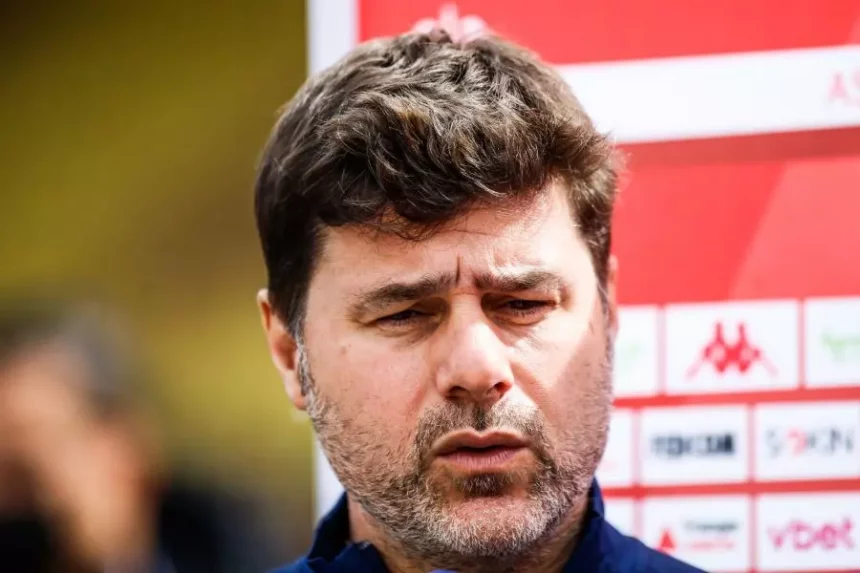
In his interview with L’Équipe, Mauricio Pochettino, 54, the US national team coach, reminds Paris Saint-Germain of a truth he knows all too well: without a unified vision at the top, talent alone is not enough. The former PSG coach re-emphasizes the importance of alignment between the president, the sporting director, and the bench, subtly defending his own tenure.
Pochettino: “If we had stayed, I think we would have had the opportunity to make certain decisions while still keeping the stars.”
“Do you think PSG has finally understood that it needs to empower the manager?”
“There are many factors. What’s certain is that I saw a coach and a sporting director who were aligned. Luis Enrique and Luis Campos, in addition to Nasser, who embody the club, demonstrated their unity. The players feel it.” And when he feels that the president, the shareholder, the sporting director, and the coach are aligned, the right path is laid out.
You were the coach of the PSG of stars like Mbappé, Neymar, and Messi. Now, there are great players, but no more true stars. Is it difficult to build a team with stars?
I believe it was possible. If we had continued, I think we would have had the opportunity to make certain decisions while still keeping the stars. We were close to achieving that goal.
Pochettino: “I think the intention of bringing these stars together was good.”
What was missing?
Time. Leo, for example: I think he was better in his second year in Paris. In his first, he needed to adapt to a new environment. He arrived from Barcelona, the year of COVID; it was difficult for him. He said so himself. I think the intention of bringing these stars together was good.
Pochettino: “We had to integrate these three players who required a different foundation.”
So it was possible?
I insist: there wasn’t enough time to create a solid—or different—team structure around these three key players: Neymar, Mbappé, and Messi. If you want to play with these three forwards, you have to think about the system that will support them and allow them to perform at their best, in their best positions. The problem is that with a potentially fragile structure, we had to integrate these three players who required a different foundation. Our idea was therefore to strengthen this defensive structure so that the three could fully concentrate on creativity.”
The interesting thing here is that Pochettino isn’t completely rewriting history: he’s defending himself, yes, but he’s mainly highlighting the real challenge that Paris ended up tackling after his departure. During his tenure at PSG between January 2021 and July 2022, the Argentinian managed a prestigious team without ever benefiting from the clear framework that gradually emerged around Luis Enrique, Luis Campos, and Nasser al-Khelaïfi.
His time in charge didn’t produce the accomplished PSG of today, but it did expose its fundamental flaw: too much emphasis on individual talent and not enough on the structure. In this sense, his time there seems less like a parenthesis than the beginning of a turning point that Paris only truly embraced after his departure. The limitation of his argument remains clear: accurately diagnosing the problem isn’t enough to guarantee a successful transformation. Pochettino identified part of the issue, but he never found the formula on the pitch capable of making this PSG stable, cohesive, and sustainable.


