

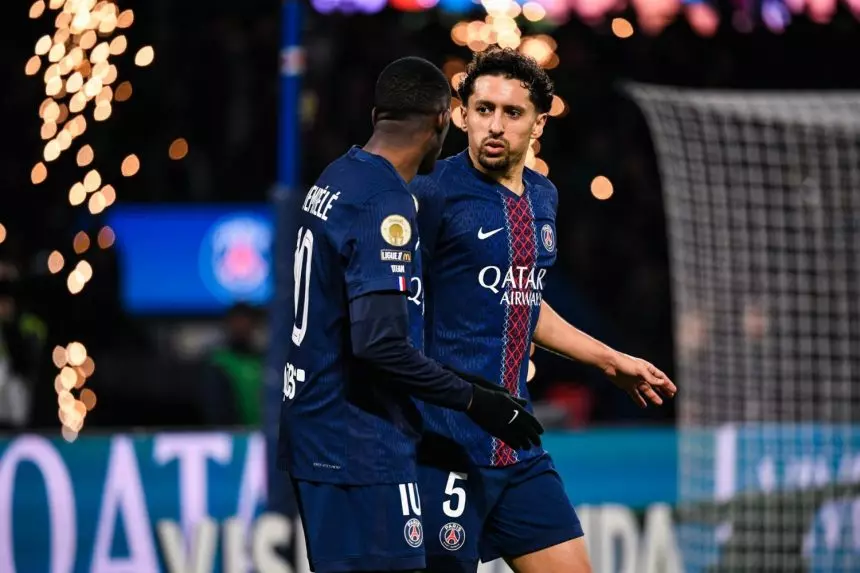
On Téléfoot, Patrick Vieira (49), former international player and coach, linked the flourishing of Ousmane Dembélé (28), Paris Saint-Germain striker, to the strength of the Parisian team. The idea is clear: when the team functions as a cohesive unit, the individual gains space, time, and options.
“Since joining Paris Saint-Germain, he has been able to showcase his full talent. When you have a strong team, the individual shines through.”
Technically, Vieira’s statement describes a very concrete phenomenon: a well-oiled machine is first and foremost about shared reference points. Distances are better managed, runs flow seamlessly, passes are cleaner, and the ball carrier has fewer “impossible” decisions to make.
As a result, Dembélé receives the ball in more favorable areas, with options already “pre-validated” by the movements around him. This is where positives breed positives: confidence grows because situations are repeated, connections become automatic, and the attacker can play faster—not because he’s forcing it, but because the game itself does some of the work for him.
It’s also a disguised management lesson: in a well-organized team, you don’t “liberate” a player by giving him carte blanche; you liberate him by providing a framework that makes his best decisions… natural.


