

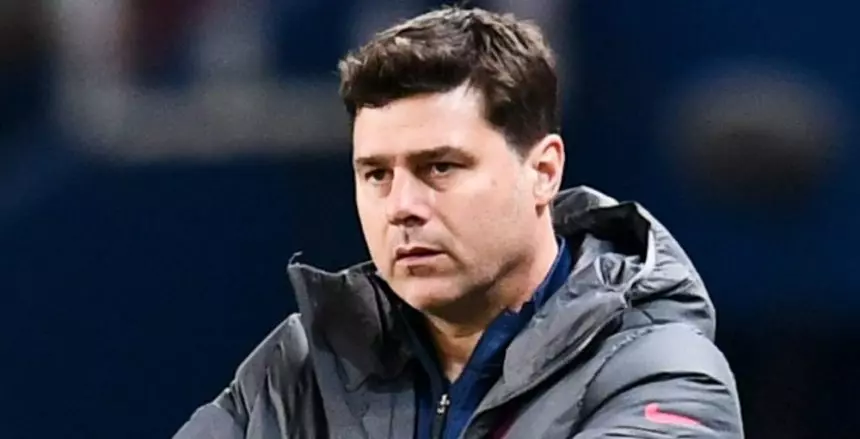
Mauricio Pochettino, 54, former Paris Saint-Germain coach and current US national team manager, gave L’Équipe a measured reflection on his time in Paris. Without erasing the elimination against Real Madrid, the Argentinian emphasized the context, the European campaign, and the lack of stability at the time.
Pochettino: “We just needed a little bit of luck at the Bernabeu in the second leg of the round of 16.”
“Paris is a good memory. Perhaps people forget it, but when you put things in perspective, we arrived in January with COVID, several injured players, and a team third in Ligue 1: the situation didn’t meet the standards for a newly arrived coaching staff. Yet, we eliminated Barcelona (4-1 in the first leg, 1-1 in the second), Bayern Munich (3-2 then 0-1), and reached the Champions League semi-finals against Manchester City without Mbappé in the second leg (1-2, 0-2).” The team was transformed the following summer, and we played well after that.
We just needed a little bit of luck at the Bernabéu in the second leg of the round of 16 (1-3). At the Parc des Princes, in the first leg, we beat Real Madrid (1-0). In the return leg, we were leading until the 61st minute and that foul by Benzema on Donnarumma. So you’re saying the manager’s approach is really bad, is that right? His approach for ninety minutes at the Parc des Princes, against the eventual champions, was bad? In Madrid, we were leading 1-0, and a second goal by Mbappé was disallowed for a marginal offside. The team was playing well before that refereeing error. Then we dropped back and lost.
Pochettino: “There was a lack of stability to achieve important objectives.”
I knew that at the final whistle of that round of 16 match, my time in Paris was over.
Really?
Yes. (He pauses.) I knew that because in Paris, the goal is to win the Champions League. Not Ligue 1 or the Coupe de France. You’ll also agree that the club was in a complex political situation at that time. And when I say that, I’m talking about sports politics. The fans weren’t happy, there were demonstrations, there was… There was a lack of stability to achieve important goals like winning the Champions League. But today, I’m happy to see that it has this sporting stability which allows for a connection between all the components of the club.”
In this statement, Pochettino isn’t asking for leniency; he’s primarily calling for remembrance. His point is to remind everyone that his PSG didn’t emerge in a serene environment, but amidst COVID, injuries, a revamped locker room, and constant internal pressure. He highlights a simple fact: despite this shaky backdrop, Paris eliminated Barcelona and then Bayern Munich in 2021 before reaching the Champions League semi-finals, and then held Real Madrid at bay for a considerable time a year later before the Bernabéu collapse.
The account rings true because it doesn’t turn everything into an excuse: Pochettino implicitly acknowledges that at PSG, a premature European exit is enough to permanently weaken a coach. He describes less an injustice than a mission that became too unstable to last. His statement also has the merit of restoring some order to the collective memory: his time in Paris wasn’t a complete success, but it’s not simply a caricature of failure either. Through this narrative, Pochettino primarily seeks to restore a coherence that the turmoil of the era had largely obscured.


