

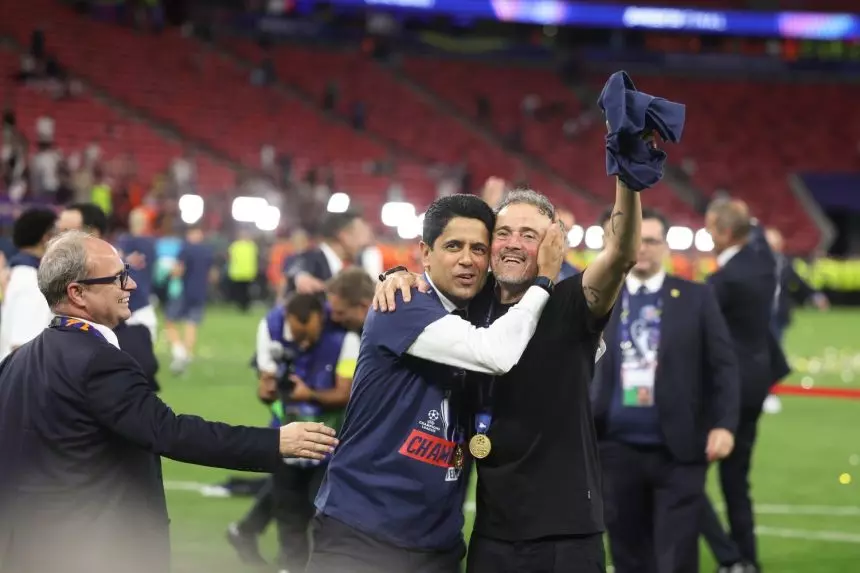
There are trophies that fill a cabinet. And then there are those that propel a club into history. On May 30, 2026, in Budapest, Paris Saint-Germain didn’t just retain its Champions League title by defeating Arsenal in the dying minutes of the night, after a 1-1 draw and a 4-3 penalty shootout victory. It confirmed that its 2025 triumph was not a mere interlude, not a lucky break, not the fragile culmination of a generation on fire. It was the beginning of an era.
Paris didn’t just win anymore; Paris entered a new era.
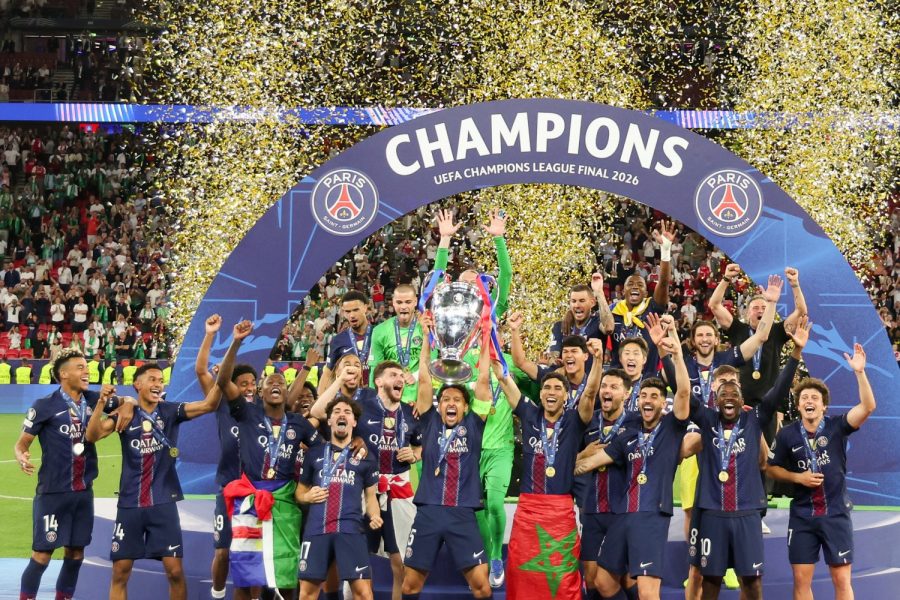
This PSG won differently. Last year, it crushed Inter Milan 5-0 in the final, in an almost surreal display, the biggest victory ever recorded in a European Cup or Champions League final. This time, Paris had to chase the game, absorb Kai Havertz’s early opener, contend with a tough, disciplined, and perfectly prepared Arsenal side, and then find the breakthrough through Ousmane Dembélé’s penalty before surviving the extreme tension of the shootout.
And perhaps that’s why this victory is even greater. Because it doesn’t just speak to a team’s technical superiority. It speaks to its maturity. It speaks to its confidence. It speaks to that rare thing in modern football: a game plan capable of withstanding when the match refuses to be beautiful.
The second title, the one that buries old insecurities
A first Champions League title can be the explosion of a dream. A second consecutive one is a declaration of power. By becoming the first club to retain the trophy since Real Madrid from 2016-2018, PSG enters a category where we no longer speak of mere success, but of domination.
For years, Paris was viewed through the lens of its downfalls. Comebacks, brutal eliminations, absurd nights, a constant questioning of its legitimacy. Even when the club was progressing, it still had to justify itself. Too rich. Too impatient. Too reliant on its stars. Too glamorous to be serious. Too French to be European, sometimes, in the lazy subtext of certain outsiders.
Today, all that belongs to a bygone era.
This PSG no longer asks permission to exist among the elite. It is there. Better yet: it now sets its own standards. Three European finals in its history, two consecutive titles, a clear first place in the current continental hierarchy. UEFA reminded everyone before the final that Paris had already become the first French club to reach three Champions League finals and the first to play in two consecutive finals. Since Saturday night, this trajectory has taken on a new dimension: Paris is no longer the club hoping to make history, it is the one forcing others to rewrite it.
Luis Enrique, the architect of a quiet revolution
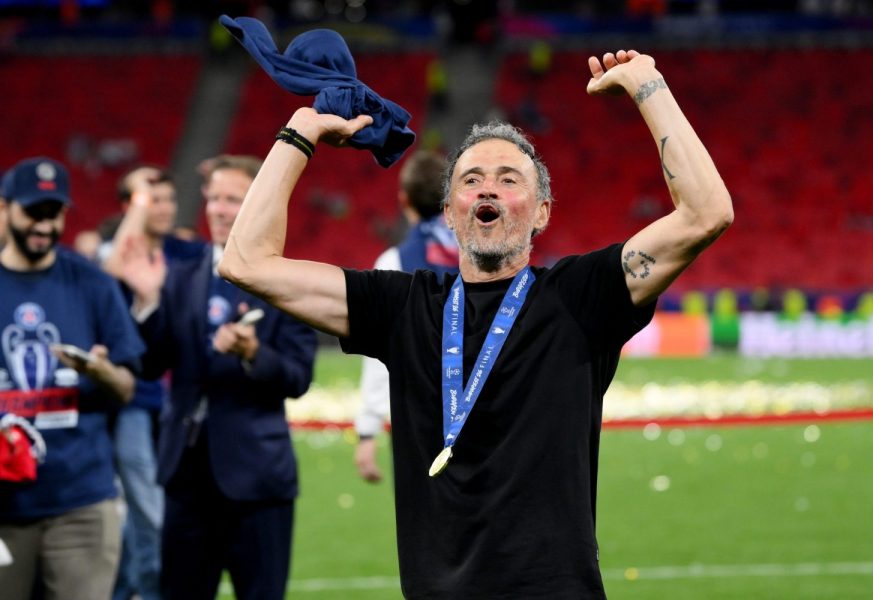
The most remarkable thing about this story is that this nascent dynasty wasn’t built amidst fanfare. It was built through an almost cold, almost methodical revolution. Luis Enrique didn’t just coach PSG. He reprogrammed it.
When he arrived in Paris, the club was emerging from an era where individual brilliance often trumped teamwork. There was genius, of course. Flashes of brilliance, nights of grace, players capable of turning a match around with a single move. But it lacked that element that defines enduring teams: a collective structure that transcended fleeting whims.
Luis Enrique removed the crutches. He established principles. Pressing, mobility, spatial awareness, courage in the build-up play, a refusal to be passive, constant rotation, and uncompromising standards. PSG is no longer a collection of talented players hoping to see them align on the right night. It’s a team. A real team. And that’s precisely what makes this back-to-back title so powerful.
The Spaniard now joins an immense club: with his titles in 2015 with Barça, and 2025 and 2026 with Paris, he becomes only the fifth coach to win at least three European Cups/Champions Leagues, alongside Carlo Ancelotti, Zinedine Zidane, Bob Paisley, and Pep Guardiola.
He is no longer just a great PSG coach. He is a major coach in European history.
Three years of Champions League success at the highest level
The consistency is remarkable. Since his arrival, Luis Enrique has taken PSG to the semi-finals, then to the title, and then to the title again. Over three European seasons, Paris has competed in virtually every possible competition. This isn’t just a peak performance. It’s a peak maintained for three years.
This is where the achievement transcends the mere result. A team can win a Champions League by taking advantage of a favorable draw, a lucky break, a goalkeeper in inspired form, or an unstoppable striker. But returning to the top, bearing the weight of that status, being expected to perform everywhere, enduring constant scrutiny, and then starting all over again—that requires something else.
It requires a culture.
And Paris has found it. Under Luis Enrique, PSG has learned to play the big games without compromising its identity. To suffer without panicking. To dominate without becoming complacent. To win beautifully when possible, and with grit and determination when necessary. Reuters even reported that the Spanish coach considered this title “stronger than last year’s,” precisely because the Arsenal obstacle had been so immense.
That word matters: stronger. Not necessarily more spectacular. Not more comfortable. Stronger. Because football isn’t just about putting on a show. It’s also the art of staying true to yourself when your opponent drags you through the mud.
Forty-five goals, and an idea that resonates as much as the players.
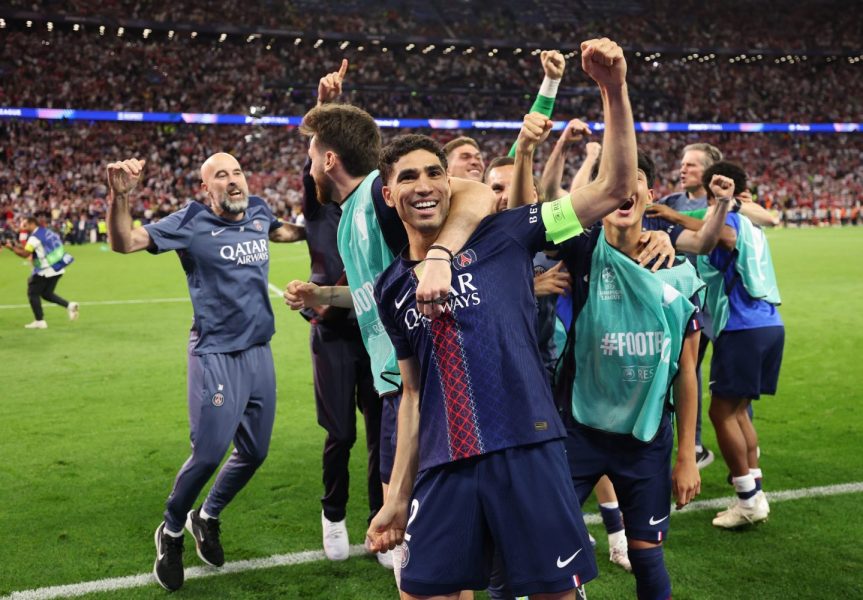
There’s one number that says it all, or almost: 45. Forty-five goals scored by PSG in this 2025-2026 Champions League. Equaling Barcelona’s historic record from 1999-2000. Not broken, an important distinction, but matched. And that’s no small detail: in this campaign, Paris has reached the statistical ceiling of the competition’s attacking history.
But the most beautiful thing isn’t the number itself. The most beautiful thing is what it tells us.
These 45 goals aren’t the product of a single attacking monster who devours everything. They are the consequence of a system that multiplies the threats. Dembélé can be devastating. Kvaratskhelia can unbalance the opposition. Doué can create chances. Hakimi can burst forward. Vitinha can dictate the play. João Neves can stifle defenses. Barcola can finish or accelerate the attack. Ramos can be a force to be reckoned with. Even the defenders become key players in the game.
This is a victory for football because Paris didn’t win by abandoning the game. Paris won by embracing it. By attacking. By pressing. By building from the back. By accepting risk. By rejecting that temptation so common at the highest level: to become small in order to win big.
PSG won big by remaining big.
A close final, but a profound domination.
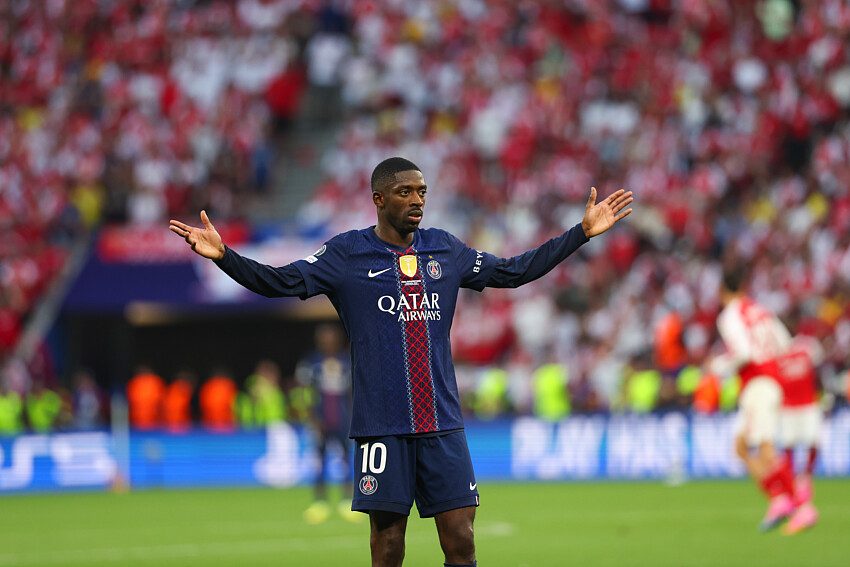
It would be too simplistic to say that a penalty shootout victory makes everything debatable. Of course, Arsenal had their reasons. Of course, the Gunners were solid, courageous, and dangerous in their game plan. Of course, a final can sometimes hinge on a shot that goes over the bar, a save, a breath, a detail that goes the other way. Football remains that wonderful and cruel sport where the best team never fully controls its destiny.
But looking at the season as a whole, the conclusion is clear. Paris dominated Europe through sheer duration, attacking output, consistency, and its ability to adapt to different playing styles. Chelsea, Liverpool, Bayern Munich, Arsenal: PSG didn’t win the title in a vacuum. They navigated a path lined with traps.
And even in this final, where everything was more tense, more cagey, more nerve-wracking, Paris ultimately asserted its dominance. Reuters notes that Arsenal only managed one shot on target and that PSG, under Luis Enrique, won all six penalty shootouts they contested. This kind of detail isn’t just about luck anymore. It’s about mental preparation, confidence, and an unseen authority.
You can win a session once. Six is something else entirely. This is a group that doesn’t falter when many tell themselves they’re ready, only to discover they’re not.
PSG has made its triumph collective.
The beauty of this Parisian cycle is also that it has shifted the club’s emotional center. For a long time, PSG’s great nights were associated with one name: Ibrahimovic, Neymar, Mbappé, Messi, Verratti, Thiago Silva. Immense figures, sometimes magnificent, sometimes tragic.
Today, Paris wins with a broader perspective. Marquinhos still lifts. Dembélé scores. Vitinha thinks. Doué grows. Hakimi pierces through. Nuno Mendes touches the line. The bench contributes. The staff matters. The public identifies with a team that no longer gives the impression of serving a star, but rather an idea.
Perhaps that is Luis Enrique’s true achievement: he has made PSG greater than its individual players. And, paradoxically, he has allowed each individual player to be stronger.
Football has won because a team has been rewarded for its collective courage. Not for its cynicism. Not for caution disguised as intelligence. Not for a destructive plan. For an ambition to play.
Paris is at the top.
This evening should not be transformed into pointless arrogance. Dominating Europe does not mean that Europe is dead. Arsenal will return. Real Madrid never truly disappears; it hibernates with a disturbing smile. Manchester City, Bayern Munich, Liverpool, Barcelona, and others will rebuild again. European football doesn’t let anyone settle in without sending out watchdogs.
But PSG has now earned the right to be judged among the very best. And that changes everything. We will no longer look at Paris with the condescension of those waiting for its downfall. We will look at it with the wariness reserved for the powerful.
The challenge begins almost now. Retaining a Champions League title is exceptional. Winning three in a row would enter an even rarer dimension, that of Zidane’s Real Madrid. But what once seemed delusional can now be stated without a hint of irony. That is already a victory in itself.
Paris Saint-Germain has stopped chasing history.
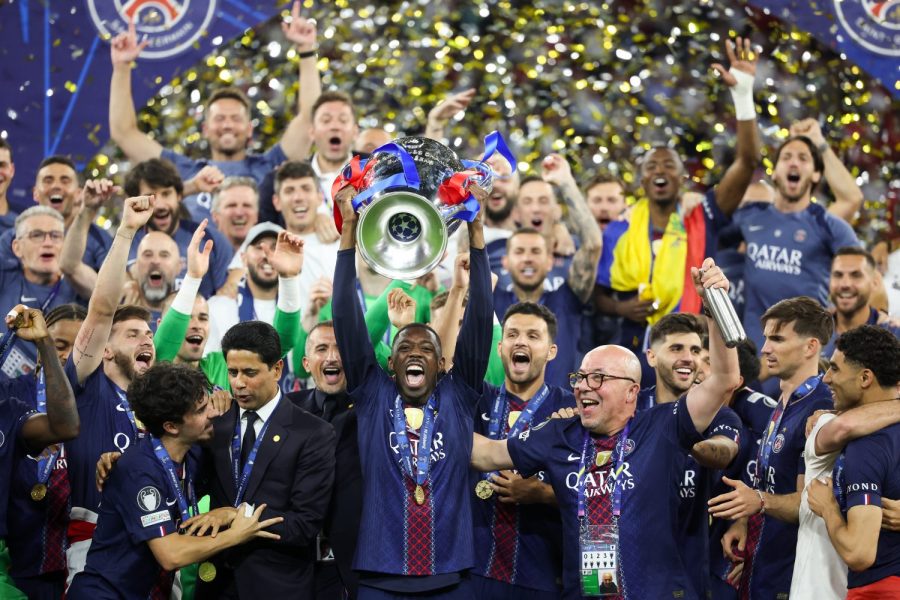
This back-to-back title is more than just a trophy. It’s a message. To Europe, of course. To their opponents, obviously. But also to Paris itself.
The club has long lived with its ghosts. It has heard them, nurtured them, fought them, sometimes suffered them. Now, they have little left to say. The Champions League is no longer an insurmountable mountain. It has become territory conquered, then defended.
And that’s where the emotion takes center stage. Because ultimately, this victory doesn’t just belong to the statistics, the records, the UEFA archives, or the media debates. It belongs to the fans who waited, sometimes suffered, often hoped. To those who endured the mockery. To those who watched the same painful images resurface every spring. To those who know that a club only becomes great by overcoming its own scars.
Paris has long chased history. For the past two years, history has been chasing Paris.


