
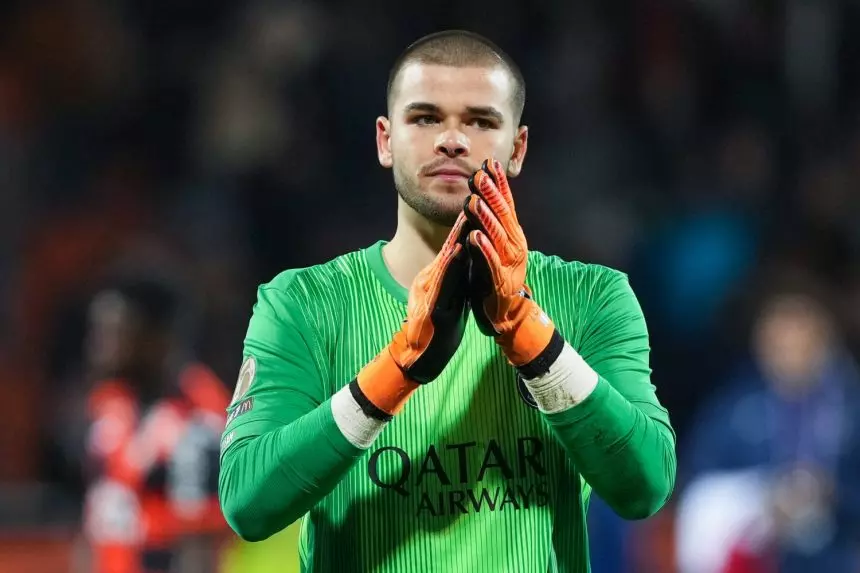
When Lucas Chevalier (24) arrived at Paris Saint-Germain to usher in the post-Gianluigi Donnarumma (27) era, he was expected to spearhead a new cycle in the Parisian goal. A year after signing from Lille, the landscape has shifted: a loss of confidence, competition with Matvey Safonov (27), missing out on the World Cup, and a future that long seemed uncertain. Yet, the French goalkeeper might ultimately stay to try and reclaim his spot. So, was it simply a case of the wrong signing, or the start of a genuine comeback story?
Replacing Donnarumma—a legacy that would normally be impossible to shoulder.
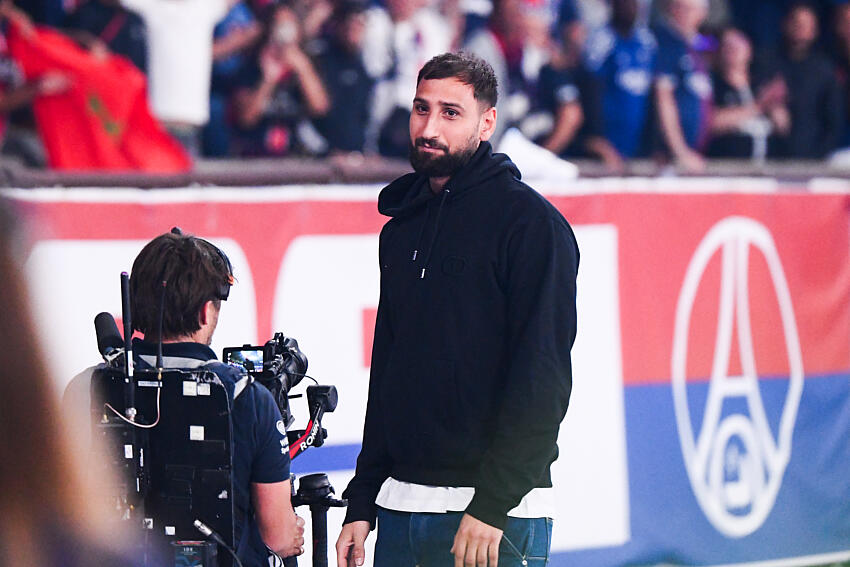
- A departure that went beyond the sporting aspect.
Some successions are simpler than others. Taking over from a goalkeeper who is under fire, aging, or at the end of his cycle can almost feel like an opportunity. Taking over from Gianluigi Donnarumma after PSG’s first-ever Champions League title was a different matter entirely.
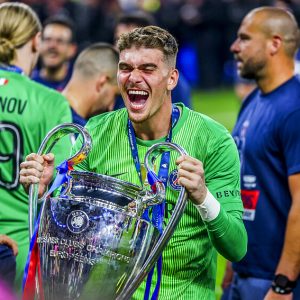
Even though the Italian never quite won over everyone in Paris, even though his distribution was often criticized, and even though his fit with Luis Enrique’s project seemed imperfect, he remained linked to a historic moment. Donnarumma had been a key figure in Paris’s European triumph, delivering decisive performances in the spring of 2025—particularly in major Champions League clashes.
His departure—or rather, his gradual sidelining—could therefore never be treated as a mere squad adjustment. For many fans, Lucas Chevalier wasn’t just arriving from Lille; he was stepping into the shadow of a European hero. And inevitably, that shadow loomed large.
- Yet, Luis Enrique’s choice made sense.
Dismissing this signing as an emotional error by PSG would be too simplistic. Luis Enrique wanted a different profile: a goalkeeper more compatible with his style of play—more involved in playing out from the back, more comfortable participating in the game, and better equipped to support a team that defends with a high line and builds play from deep.
And it is worth remembering: Lucas Chevalier was not some exotic gamble plucked from a spreadsheet or a last-minute transfer window whim. He had built a genuine reputation at Lille. He was coming off a solid, highly regarded season, establishing himself as a young, modern French goalkeeper who was already a standout in Ligue 1.
PSG was not merely signing a player with potential; they were recruiting a goalkeeper on the rise who was already proven at the top level. It is the kind of profile that fits perfectly with the club’s recent evolution: fewer established global stars, and more players to develop within a demanding environment.
The problem is that Paris is not a quiet laboratory. It is a centrifuge.
When the self-assured goalkeeper vanishes.
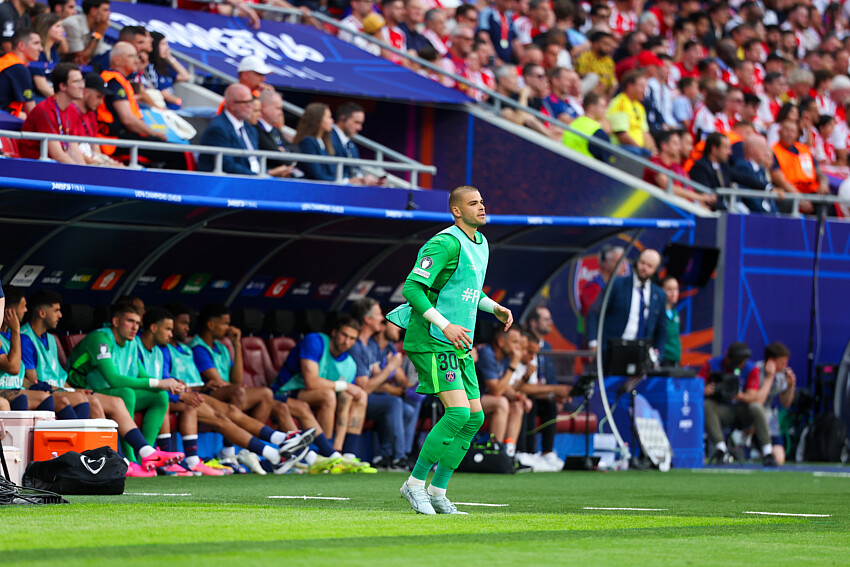
- The move from Lille to PSG: a shift in the noise.
At Lille, Lucas Chevalier had something special. A presence. A personality. He gave the impression of a goalkeeper fully immersed in the game—someone who owned his emotions, communicated with his defense, and exuded a sense of control over his penalty area, even when things weren’t perfect.
At PSG, that image quickly became blurred. It wasn’t just a matter of saves or statistics. For a goalkeeper, confidence shows in the details: attacking an aerial ball with conviction, distributing play without a tremor, issuing commands with authority, or a gaze that reassures rather than questions.
When that mechanism falters, everything becomes a heavier burden. Chevalier didn’t just seem to be struggling; at times, he seemed less like himself. Less spontaneous, less commanding in his demeanor, less assured in his role. It was as if the Parisian jersey, rather than empowering him, had begun to crush him.
That may well be the real question: has his level dropped, or has he simply lost his bearings?
- Paris is unforgiving to goalkeepers who harbor doubt.
The goalkeeping position at PSG is unique. The club often dominates and concedes few chances, yet it leaves its last line of defense highly exposed during the rare moments the opposition threatens. At Lille, a goalkeeper can string together saves, settle into the rhythm of the match, and make his mark through sheer volume of action. At Paris, he might go thirty minutes with nothing to do, only to suddenly have to thwart a counter-attack, handle a high-pressure distribution, or come off his line into a box crowded with stationary defenders.
This reality demands extreme concentration and natural authority. Yet, when doubt creeps in, every ball becomes a test. A short pass becomes a risk. A cross becomes an ordeal. A moment of hesitation becomes a talking point.
And in Paris, the noise rises quickly. Very quickly. Sometimes too quickly. The Donnarumma debate was never far away. Every mistake by Chevalier invited comparisons. Every average performance gave the impression that PSG might have sacrificed a hero for a goalkeeper who was still learning the ropes. It is unfair in a sense, but that is the price of playing for a club like that.
Safonov: the competition that changes everything.
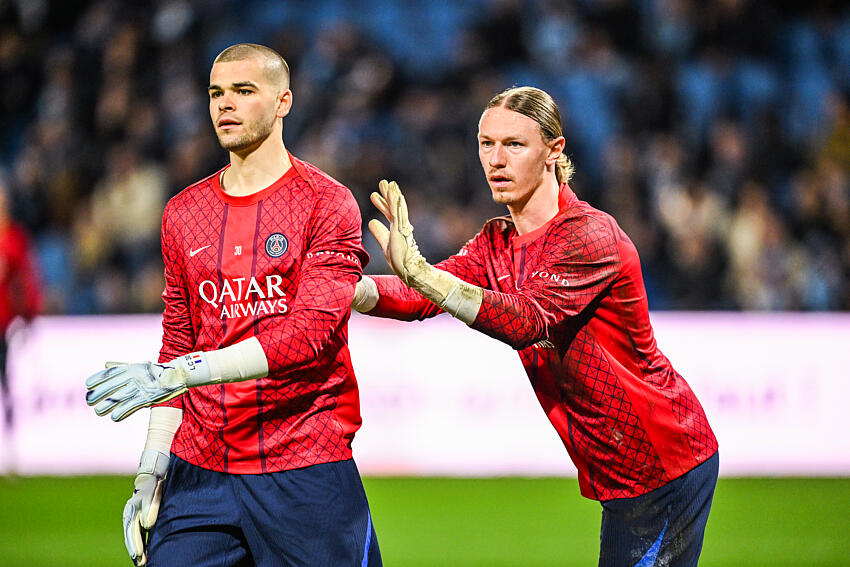
- Competition meant to spur improvement has turned into a direct threat.
Initially, Matvey Safonov was expected to provide serious competition—yes—but not necessarily become the season’s major talking point. He was simply part of the squad, bringing his own qualities, experience, and a more stoic demeanor. But the narrative shifted.
Chevalier’s struggles, followed by the opportunities that fell Safonov’s way, altered the balance. The Russian capitalized on the circumstances. He appeared solid, composed, and efficient. A run of form like that does more than just earn a goalkeeper points; it shapes his image.
And at a club like PSG, image matters. Safonov became the reassuring presence, while Chevalier became the one forced to justify himself.
- The danger of being the “former future number one.”
There is a very uncomfortable position in football: that of the “former future starter.” That is exactly where Lucas Chevalier found himself. He didn’t arrive merely as a backup; he wasn’t signed to patiently wait in the shadow of a legend. He came to embody the future.
Losing one’s spot under these conditions is not like standard competition for a place; it represents a symbolic demotion. It isn’t just Safonov playing in his stead—it is the initial project itself that is cracking.
The consequences were also felt at the national team level. Chevalier could naturally have aimed for a spot in the squad for the 2026 World Cup. His absence, therefore, took on significant symbolic weight. For a goalkeeper of his age, it is not a career-ending blow, but it is a setback.
Missing a World Cup—especially at that age and in that context—serves as a brutal reminder: in a career, timing matters almost as much as talent.
Leave or stay: the real turning point.
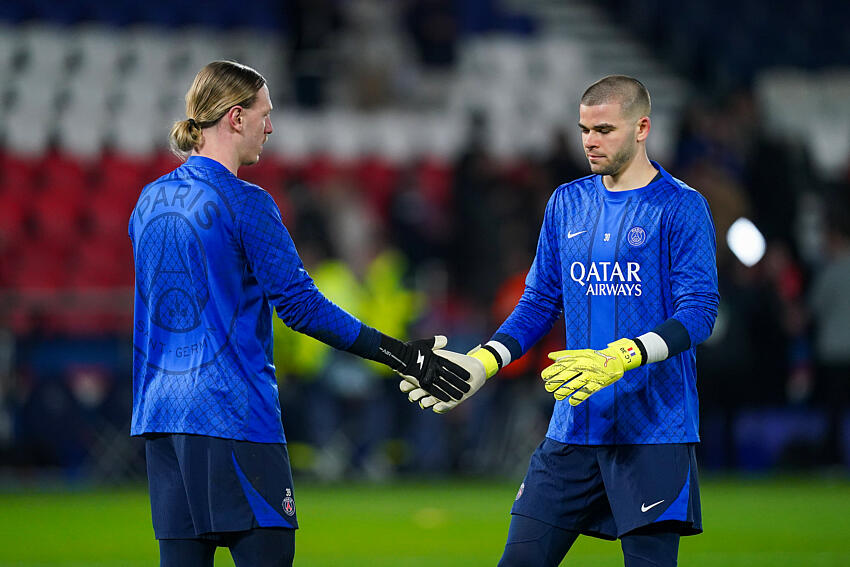
- A future still undecided in the midst of the transfer window.
At this stage of the transfer window, it is impossible to completely close the book on the Lucas Chevalier situation. Recent indications suggest a goalkeeper tempted to stay at Paris Saint-Germain to fight to regain his spot. However, in early July, a trend is not a final decision. Consequently, the possibility of a departure cannot be entirely ruled out.
From a sporting perspective, leaving would make sense. Chevalier needs to play, regain his rhythm, rebuild momentum, and avoid letting the image of a goalkeeper who went from a projected number one to a vulnerable backup take hold for too long. For a player of his age, remaining in the shadows for another season could pose a real risk, especially after a year that was already difficult.
Yet, leaving now would also leave a bitter taste. It would mean quitting Paris too soon, after an unfinished first season—almost as if the story had ended before it truly began. It would give the impression that PSG had misjudged the timing. As for Chevalier, he would leave behind the image of a talented goalkeeper who was overwhelmed by the demands of Paris before he could prove himself.
- Staying to fight: a compelling but risky option.
The other path—the one that currently seems to be on his mind—is to stay and attempt to overturn the pecking order. This choice would demonstrate character. It would mean accepting competition with Matvey Safonov, getting back to work without guarantees, and asserting that his Parisian journey cannot be defined merely by a few months of uncertainty.
It would serve as a sporting response: refusing to run from the noise, refusing to abandon the project, and refusing to let a poor first impression have the final say. For a goalkeeper who arrived with the ambition of embodying PSG’s future, this option makes sense—provided, of course, that the club still offers him a genuine prospect.
For that is where the danger lies. If Chevalier remains without a genuine opening—facing a hierarchy that is already set in stone and with only a few minor matches to play—the risk would be significant. A second season as a backup could stall his development, further complicate his path back to the French national team, and weaken his market value. In that scenario, staying would no longer be an act of courage, but a misjudgment of his situation.
This is the real turning point: Chevalier must choose between the relative security of a fresh start elsewhere and the riskier challenge of fighting to win his place at Paris. PSG, too, needs to clarify its stance. Continuing to believe in him means giving him a genuine opportunity. Keeping him merely as a high-end insurance policy would be a convenient solution for the club, but a dangerous one for the player.
What is next for Lucas Chevalier?
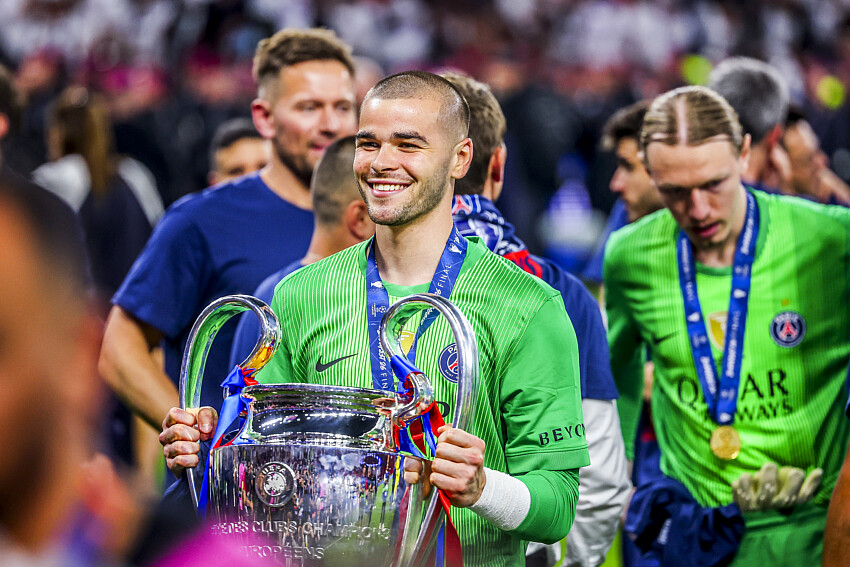
- The great story is still alive.
It would be unfair to close the book now. Chevalier hasn’t lost his talent in the span of a few months. He hasn’t forgotten how to dive, distribute the ball, command his box, or read the play. Above all, he has experienced what many players discover upon arriving at PSG: technical ability isn’t enough if the mindset can’t keep pace with the media, sporting, and emotional demands.
The great story is still alive. It would require a strong pre-season, a more assertive attitude, and perfectly executed cup or rotation matches—followed by seizing the right opportunity. At PSG, the established order can shift quickly. Luis Enrique has demonstrated this with other positions: status offers no long-term protection, but neither does it permanently condemn a player.
Chevalier must therefore take the initiative. He cannot simply wait for Safonov’s form to dip or hope the debate dies down on its own. He needs to project a different image: that of a goalkeeper who has absorbed the shock, understood the demands, and returned with a thicker skin.
- But the risk is real.
The alternative scenario is less romantic. Chevalier stays, Safonov retains the upper hand, and the season settles into a state of limbo. A few minor matches, little continuity, no return to the national team, and a transfer market that watches without rushing to act. That is where his career could become precarious.
Not because Chevalier would be “finished”—that would be a ridiculous notion. But because modern football allows little time for uncertain career trajectories. This is especially true for goalkeepers, given the scarcity of positions, the stability of hierarchies, and the reluctance of clubs to take a chance on players trying to rebuild their careers.
That is why PSG also bears a responsibility. If Paris still believes in Chevalier, a clear framework is needed. Genuine competition, yes. A meritocracy, yes. But not a state of constant uncertainty where the player is left wondering whether he is a credible contender or merely a luxury insurance policy.
The bottom line: whether he fails or bounces back, it all comes down to what happens now.
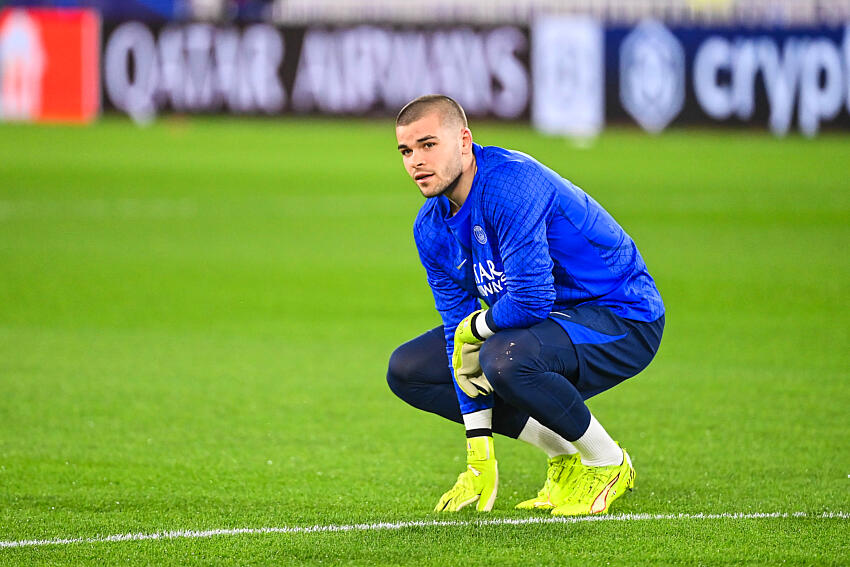
Lucas Chevalier did not arrive at PSG as just another player. He arrived to succeed a goalkeeper who had become a European hero, at a club that was European champion, under a coach with a very specific vision for the position. This context explains a great deal. It does not excuse everything, but it guards against lazy judgments.
His initial stint in Paris was a failure—or, at the very least, a major disappointment. He lost his spot, lost credibility, and missed out on the World Cup. It is harsh, but it is the reality. The question now is no longer whether his arrival made sense; it did. The question is whether he can turn a thwarted plan into a genuine sporting comeback.
If he stays, Lucas Chevalier will not just be playing to reclaim the starting goalkeeper role. He will be playing to regain control of his own narrative. And at a club like PSG, that is sometimes the toughest match of all.