

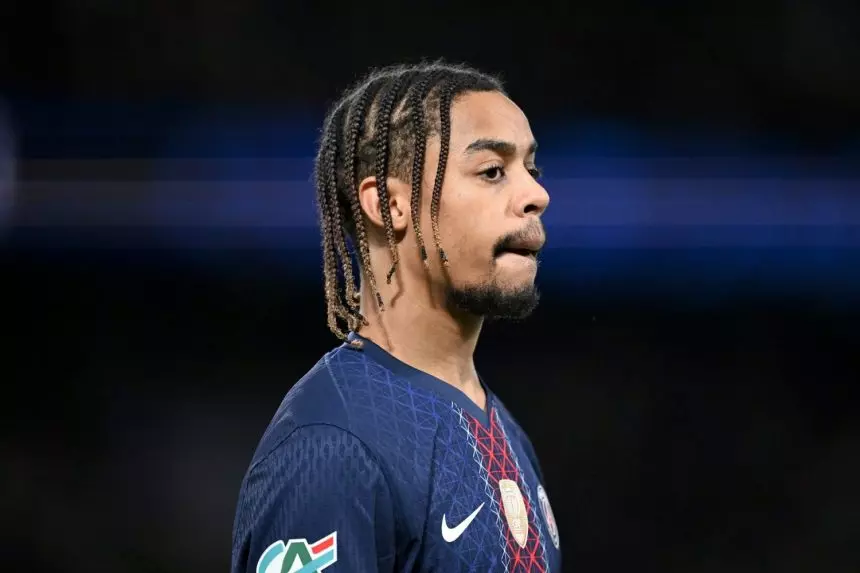
At 23 years old, Paris Saint-Germain winger Bradley Barcola finds himself at the center of a reignited contract dispute. According to L’Équipe, a financial agreement had been drafted in the spring before a change of agent and a new context, marked by the Champions League victory.
“The club maintains that a financial agreement had been drafted in the spring.”
“The club maintains that a financial agreement had been drafted in the spring with his representatives, but nothing had been signed. Since then, the player has changed agents and the landscape has evolved, with the Champions League victory. At least PSG doesn’t need to be involved in two separate cases: Dembélé and Barcola share the same agent.”
At PSG, calm never truly exists. When the schedule becomes less packed and the sporting news slows down, the transfer window and contract extensions become media fodder. The Barcola situation fits perfectly into this pattern. A period where the winger scores less, some debates arise, and the contract issue resurfaces. Not because an agreement is imminent, but because it becomes a convenient angle for questioning his status.
The club points out that a financial framework had been established, without a signature, before the landscape changed – a new representative, new European prestige. In this context, rumors serve as a barometer of current doubts. They don’t indicate urgency, but rather the existence of a latent issue. In Paris, contract extensions are as much a sporting matter as a cyclical narrative, revived as soon as the pitch allows for a brief lull.


