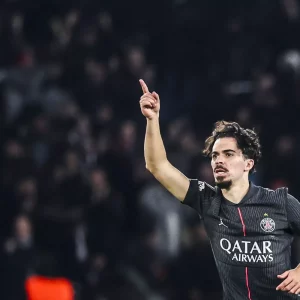

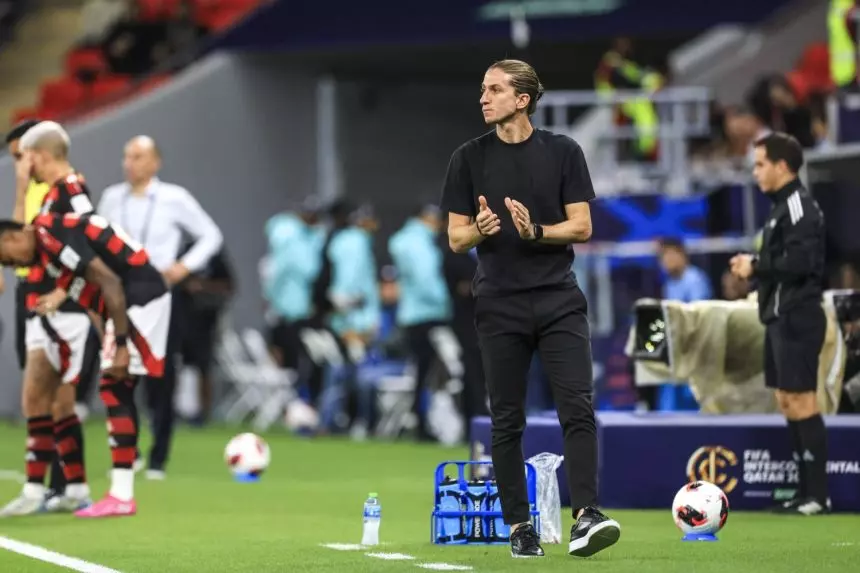
This Wednesday at 6 p.m. (CET), Paris Saint-Germain faces Flamengo at the Ahmad-ben-Ali Al Rayyan Stadium in Doha, Qatar, in the final of the 2025 Intercontinental Cup. In a press conference, Brazilian coach Filipe Luis spoke about the upcoming match and their Parisian opponent.
Felipe Luis: “In a final, you have to make as few mistakes as possible.”
“We’re not talking about the match against Bayern. Every match is different. We’re not going to play against Bayern, we’re going to play against PSG, even if their pressing is just as intense. Back then, I thought our objective was to beat Bayern, and they were better than us. Today, the plan is different, but without abandoning our principles, the DNA of Flamengo. It’s a different match, a different story, and Luiz Araújo is right on one essential point: in a final, you have to make as few mistakes as possible.”
Before our Libertadores victory, I often heard people say that our team didn’t know how to play in the Libertadores, that it lacked soul. After our victory, has everything changed? I don’t think about that (experience in major competitions), I think about the quality of our players.
Felipe Luis: “I am convinced that my players are the best.”
A victory possible?
It’s possible. Of course I believe it, and of course I tell the players. In football, anything is possible. I am convinced that my players are the best. I’ve always told them that since I arrived; their style of play and their commitment in training prove it. This team is capable of anything, capable of making history. Because I believe in them so much, they believe it too, obviously.
Dominating a final is flattering. Winning it is what truly matters. Football history is cruel but clear: no one remembers for long the teams that have monopolized possession without lifting the trophy. In a final, control is merely a means, never an end. Filipe Luís understood this well against Paris Saint-Germain: intensity, pressing, and collective quality all count, but they must lead to one very concrete thing: victory. The rest fades into history.
A final is judged neither by possession nor by intentions, but by the ability to be cold, precise, and opportunistic. That’s where everything changes. Dominating without finishing fuels regrets. Winning, even without playing brilliantly, forges legends. And at the final whistle, it’s always the winner’s name that is etched in history, never the most captivating one. The match isn’t decided in the press conference; it will be decided on the pitch.