

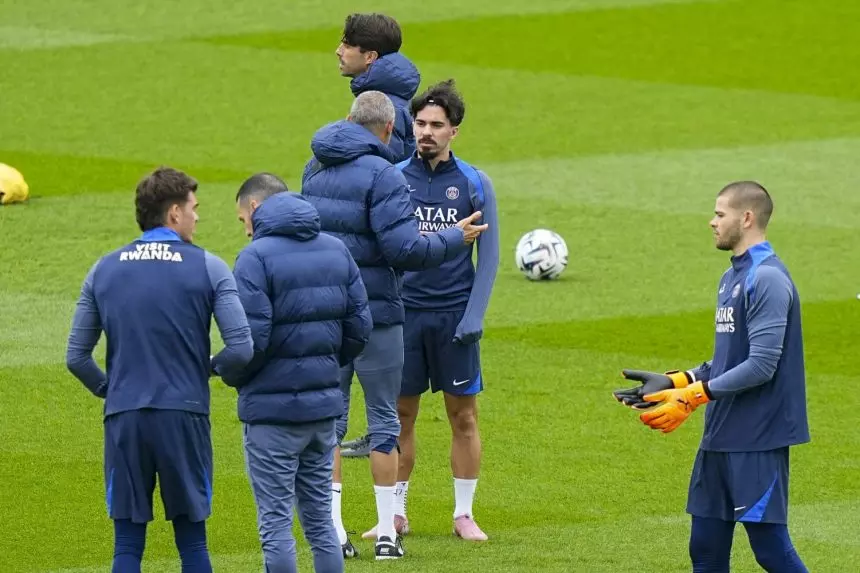
Paris Saint-Germain midfielder Vitinha (25 years old) spoke to A Bola about the mental approach implemented by Luis Enrique before the Champions League final. A subtle psychological strategy, designed to bring the Parisian squad back to the right level of intensity. Not too much, not too little. Just what was needed to win.
Vitinha: “This match will be won by the team closest to 100%.”
“He said that for this match… A crucial point: whoever is at 100% will win. His work before the match, the day before, the two or three days prior, incredible! He tried to… calm things down. This match will be won by the team closest to 100%.
That is to say, they will be at 150, 160, 170. Go here and go back. Go here and go back.” Because they’ll be at 120, 130. And when you’re too focused on something, sometimes you freeze up. You see? You really want to do one thing, you really want to win. And sometimes, that’s counterproductive. And I think… that’s perfectly logical, first of all, and I think that was the key.
Vitinha: “He brought us back to reality a bit.”
He brought us back to reality a bit. Be at 100%, but no more. It will be against the team they’re trying to beat, they’re going to play against us. Don’t forget, it’s just one match. I already know it’s important, you can’t say a Champions League final isn’t, but life goes on. We haven’t won or lost. It’s a recurring theme. Life goes on. And I completely understand his point of view and I agree. Life goes on. “
What truly distinguishes Luis Enrique in crucial moments isn’t just his vision of the game, but his profound understanding of human nature. Where many coaches mentally burden their players before a final, he does the opposite: he lightens the load. He knows that excessive tension is the number one enemy of performance. Too much desire, too much at stake, and the player freezes. His intelligence lies in sensing this tipping point and acting before it’s too late.
Luis Enrique never denies the importance of a major match, but he refuses to let it become a paralyzing burden. By reminding everyone that “life goes on,” he doesn’t trivialize the final: he liberates minds.
This ability to calm a group, to bring the players back into the right mental state, reveals a manager confident in his ideas, but above all, confident in the men he leads. In those moments, he no longer talks about tactics, he talks about balance.” And in a Champions League final, this balance can be worth far more than a system adjustment.


