
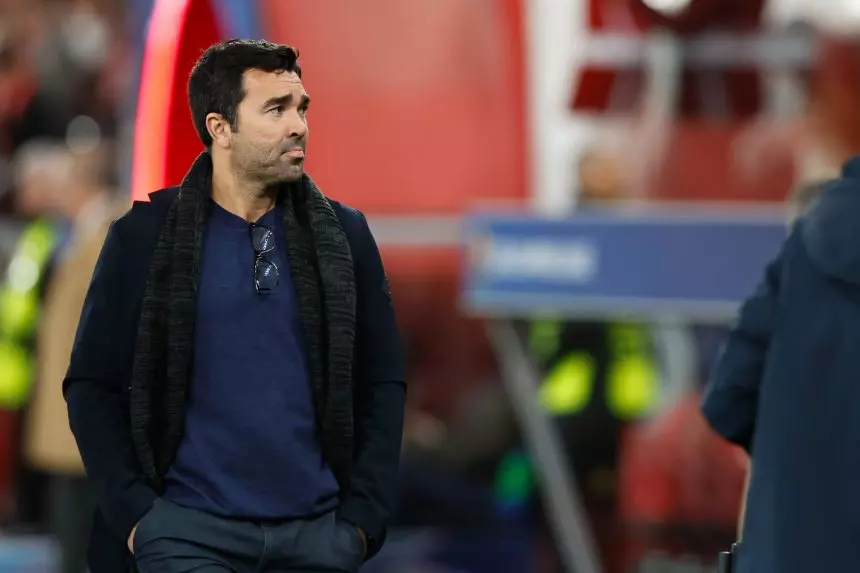
Eighteen-year-old Dro, a midfielder who came through La Masia, left FC Barcelona to join Paris Saint-Germain, despite a sporting project presented as a major undertaking by the Catalan club’s management. Interviewed on TNT Sports, Deco (Barcelona’s sporting director) offered a revealing commentary on the club’s unease. More than just a transfer, this departure highlights a profound shift in European football.
Deco: “It’s not important for us to know who his agent is; what matters is the player’s profile.”
“Dro is a boy who turned 16 in January 2024. In March, he signed his first professional contract, and during that period, he trained with the first team two or three times. It’s not important for us to know who his agent is; what matters is the player’s profile.
He had already trained with the first team at the beginning of last season, and Flick was impressed with him.” And despite the presence of other players in his position, the coach showed him affection.
Deco: “If I were young and at Barcelona, I wouldn’t leave.”
In Dro’s case, he had a six million euro release clause, like most players signing their first professional contract. All I could do was explain our project for him and the environment that would allow him to develop.
The coach helped him, he had him train with him, and he took him to preseason. The coach’s disappointment stems partly from that. With all due respect to PSG, which is an exceptional club and where I have friends like Luis Campos, if I were young and at Barcelona, I wouldn’t leave. But everyone makes their own choices; we all know the influence that exists. We don’t know if it comes from his parents, but that’s his business.
Deco: “It’s not a financial issue; we reached an agreement with Paris thanks to our good relationship.”
“It’s not a financial issue; we reached an agreement with Paris thanks to our good relationship, but Paris had no influence on his decision. I hope he’ll be happy and that he’ll develop as a player. Rushing things here or in Paris would be detrimental. Sometimes the methods and people involved aren’t right. But we shouldn’t make a big deal out of it; he was just another player on the first team, he made this decision, and that’s all there is to it.”
Deco’s words convey neither anger nor resentment, but a clear-eyed disillusionment. FC Barcelona is struggling with these early departures because they strike at the very heart of its identity. La Masia isn’t just a training center; it’s a foundational narrative, built on patience, the passing down of knowledge, and the idea that a young player, if he waits, will eventually earn his place. Seeing Dro leave after experiencing the first team, impressed by Flick, and integrated into the youth academy, gives the impression of a cycle interrupted before it had truly begun.
But the football of 2026 is no longer the one where Barcelona held a monopoly on “good development.” PSG, long caricatured as a club that stifled its young players, has changed its approach. Playing time, increased responsibility, gradual integration: Paris now offers a credible, transparent, and competitive framework. Dro didn’t abandon the youth system; he chose a different path to progression. Barcelona’s unease is real, but above all, it reveals this: La Masia remains a benchmark, but it is no longer alone in the market for the future.