

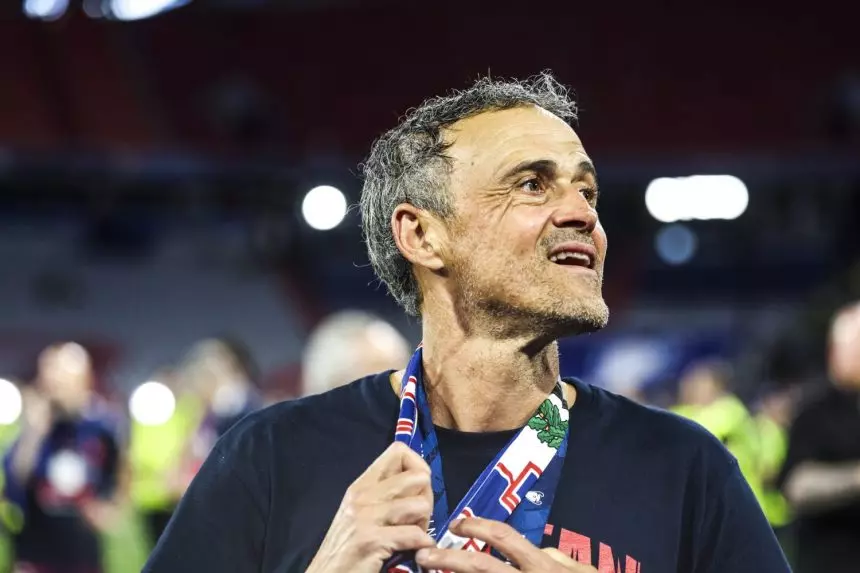
The 2025 season brought an end to a long wait for Paris Saint-Germain. By winning all the major trophies, the Parisian club’s status changed, both in France and in Europe. But once the euphoria subsided, a question arose: what becomes of a team after winning everything? The second half of the 2026 season opens a unique chapter for Paris Saint-Germain. It’s the story of a young, talented group, now under pressure to deliver, that no longer has to promise but to prove itself. To endure. To live up to expectations quietly.
This editorial is a work of realistic fiction. A possible story, built around very real protagonists, to imagine how this PSG could journey across Europe to a Champions League final. Not to predict an outcome, but to explore destinies, roles, and what this team is becoming.
The Goalkeeper and the Embraced Solitude
A goalkeeper never truly becomes great when everything is going well. Lucas Chevalier learned this without drama, but also without escape. The revelation doesn’t come in the form of an impossible save or a viral parry. It comes in the form of unwavering calm. A way of staying upright when the game falters, when the team doubts itself for a moment, when Europe reminds us that football is never a straight line.
Chevalier doesn’t play to silence the comparisons. He plays to close down the angles, literally and figuratively. He accepts what the position demands: to be the last line of defense and the one ultimately responsible. As the season progresses, Paris understands that it no longer defends with fear. It defends with confidence. And often, it all starts there.
The Titan Without Words
There are defenders who reassure with words. Willian Pacho reassures with his sheer presence, his reading of the game, his undeniable presence. He doesn’t need to explain his football. He lays it down, block after block, duel after duel. The confirmation isn’t spectacular. It’s relentless.
Europe, always slow to recognize what isn’t flamboyant, finally understands. Pacho isn’t a surprise. He’s a bulwark. And behind him, PSG stops retreating. You don’t build a European campaign on attacking promises. You build it on men who refuse to give an inch.
The Midfield as a Secret Language
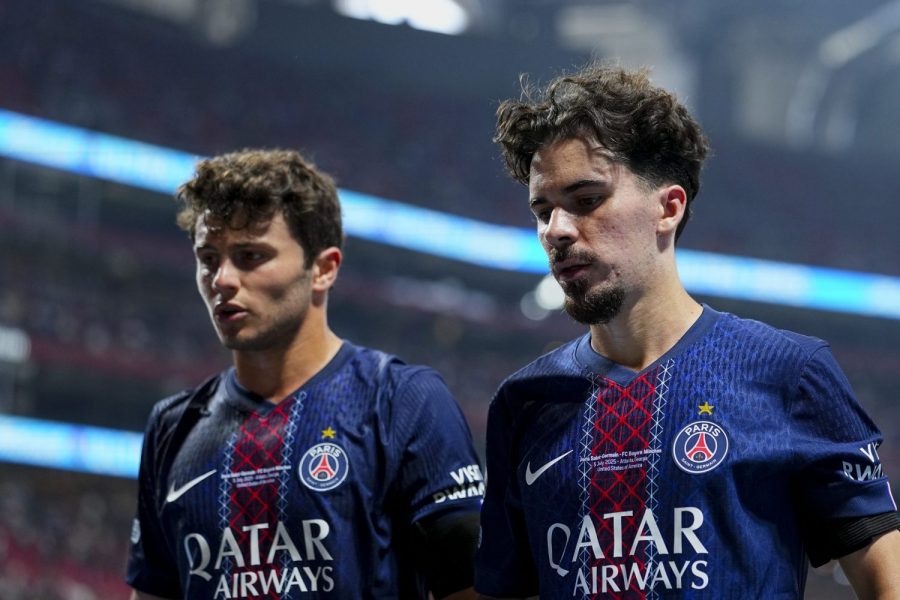
There are duos who are searching for each other. Vitinha and João Neves already understand each other. Their football isn’t a demonstration. It’s a constant conversation. A game of relays, positioning, and well-placed silences.
Vitinha sets the tempo. Neves provides the precision. Together, they transform the midfield into a collective breath. PSG no longer chases the ball; they wait for it. They no longer get frustrated when the opponent presses; they shift the problem elsewhere. On big European nights, this duo doesn’t always shine. They endure. And endurance, at this level, is a luxury.
The Vertigo of the Very High Level
Talent is a dangerous promise. Désiré Doué is discovering this as the rounds progress. He has what others don’t: the ability to turn a match around with a single detail. But he’s also learning what that implies: constant observation, waiting, the temptation to force the move.
The 2026 season doesn’t make him a static icon. It makes him a player in conscious development. The Ballon d’Or isn’t a goal. It’s an abstract, almost distant horizon, serving only to remind us of one thing: genius is worthless without control. Doué is beginning to understand that the very highest level doesn’t reward constant audacity, but the right choice at the right time.
The Cold Rock
There are players who command respect through their voice. Warren Zaïre-Emery commands respect through his quiet presence. He plays youthfully without being frivolous. His body is already ready, his mind elsewhere. He absorbs the shocks, the situations, the expectations. And he asks for nothing.
In this second half of the season, PSG relies on him as a silent certainty. He doesn’t symbolize the future. He embodies the stable present. In the matches that matter, those where emotion threatens to overwhelm everything, Zaïre-Emery is there. Cold. Dense. Essential.
The Man Who Waits
Not all destinies unfold at the same pace. Gonçalo Ramos knows this better than anyone. A super-sub by role, a starter by mindset. He’s learning that the bench isn’t a punishment, but a school. That every appearance is a mission. That football rarely rewards those who demand, but often those who accept.
The decisive goal, the one that will be recounted later, didn’t come from selfish determination. It came from a precise movement, a run without looking, a ball attacked as if the entire season were contained within it. Ramos doesn’t force his destiny. He honors it.
The Final, More Felt Than Played
The 2026 Champions League final isn’t a summary.
It’s an accumulation of sensations. The trembling bench. The suspended player watching, breathless. Paris falling silent before daring to believe.
The match belongs to no one. It transcends bodies, minds, and years. The score exists, of course. But it’s almost secondary. Because PSG no longer plays to exorcise a past. It plays to remain true to what it has become.
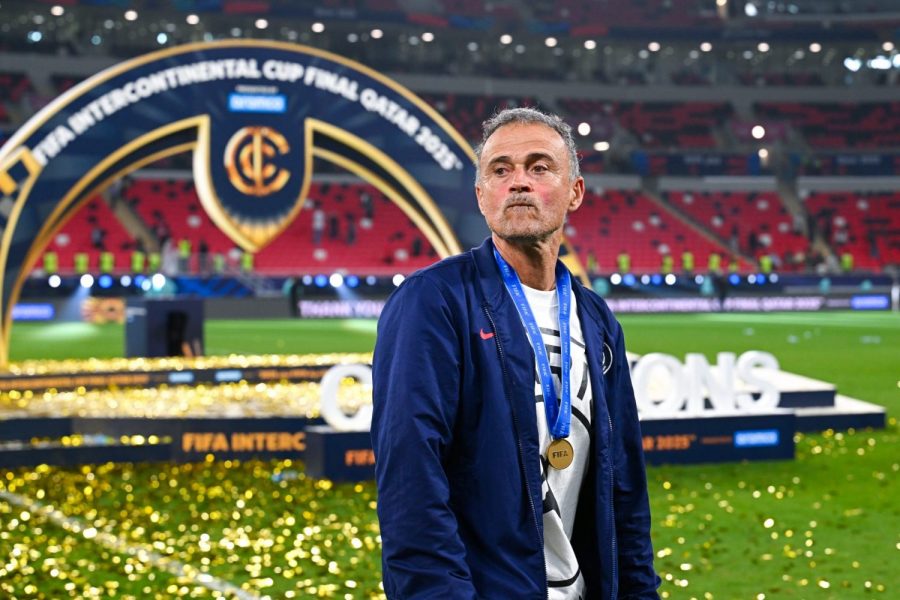
Luis Enrique, the man who takes away rather than adds
Luis Enrique doesn’t often talk about destiny.
He talks about work, repetition, responsibility. And yet, this entire season of realistic fiction bears his mark: that of a coach who dispels illusions instead of creating them.
After 2025, he could have celebrated. Settled in comfort. Let the team savor what it had achieved. He did the opposite. He tightened things up. Repeated. Demanded. As if winning once had only served to prove one thing: that everything could still collapse.
Luis Enrique doesn’t coach to seduce Europe. He coaches to prepare his players for what Europe will take from them: time, space, certainty. In this second half of the 2026 season, he isn’t looking for perfect matches. He’s looking for the right reactions. Sound decisions. Players capable of accepting less brilliance in order to have greater longevity.
His PSG isn’t a team of instinct. It’s a team of principles. Pressing isn’t a sudden impulse, it’s a rule. Possession isn’t an end in itself, it’s a form of protection. Even the bench becomes a narrative tool: entering, leaving, accepting, returning. Nothing is merely decorative.
In the locker room, Luis Enrique rarely talks about the final. He talks about behavior. About what each player does when the ball isn’t coming. When the stadium falls silent. When fatigue clouds reflexes. He knows that great matches are rarely lost due to a spectacular error. They’re lost due to a tiny concession.
If this team moves forward quietly, it’s not out of forced humility.
It’s because his coach taught him that noise is often a form of escape.
What remains:
Winning doesn’t change everything.
Losing doesn’t destroy anything when the essentials are there.
This 2026 season leaves behind more than just a trophy or a sense of regret. It leaves a mark. The mark of a mature, cohesive, and cohesive PSG. A team that no longer needs to announce itself to exist. A team that understands that silence is sometimes the most effective form of dominance.
Perhaps it’s just fiction.
But in Paris, it nonetheless feels like a reality in the making.


