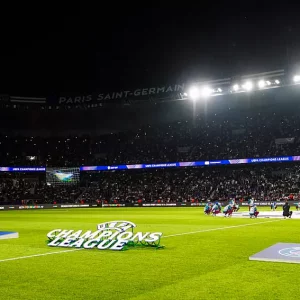

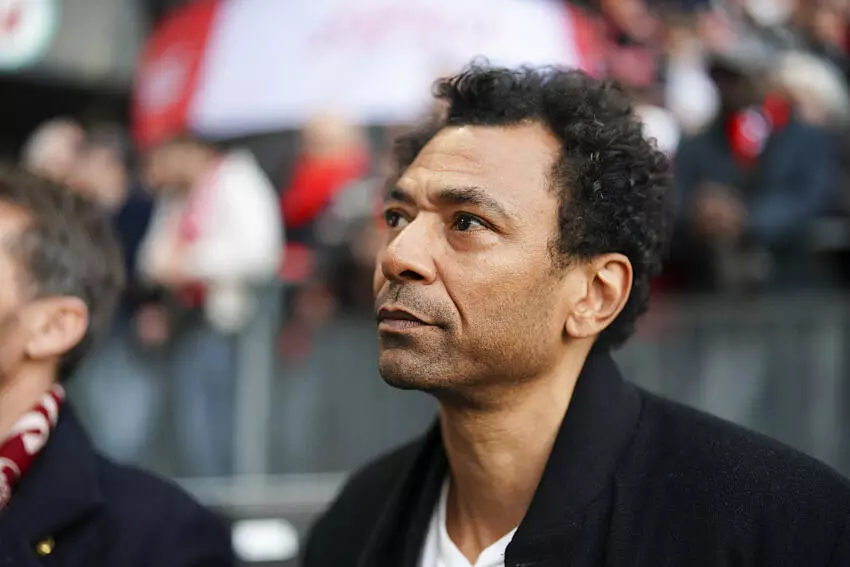
Édouard Cissé, a former Paris Saint-Germain midfielder, spoke to L’Équipe about PSG’s 4-2 Champions League victory over Manchester City. He discussed the two sides of Luis Enrique’s team, defended Ousmane Dembélé, and shared his thoughts on Désiré Doué.
Cissé: “PSG struggled right from the restart”
How do you explain the nature of the second half, which was so different from the first?
“There were, of course, the three substitutions City made at the break. But, above all, it was the physical aspect that tipped the scales in the Sky Blues’ favor. Right from the restart, PSG struggled; they no longer had the energy to push up the pitch, and they found themselves under wave after wave of attacks.
You might have thought the fourth goal would give them some breathing room, but that wasn’t the case. It remained difficult right to the end—on top of the two goals conceded, there was a shot against the post, one against the crossbar, and several saves from Safonov.”
Cissé: “They don’t like being pinned back in their own half”
Ultimately, do you still consider PSG’s victory deserved, and what is your lasting impression?
“Each team had their moment, playing in two very different styles: a more ‘Latin,’ polished approach from the Parisians, and a much more direct, physical style from the Citizens. It’s true that PSG even had a chance to make it 5-2 toward the end. Still, the Parisians faltered in the second half, and that has to be taken into account. They don’t like being pinned back in their own half.”
Cissé: “They need to be able to go the distance for the full match”
As soon as they can no longer press to win the ball back in the opponent’s half, things get complicated for them, and they end up on the back foot. “Against major opponents, the team will need to be able to go the distance for the full 90 minutes. But then again, we’re still only at the start of the season.”
Scoring four times on City’s home turf—following such a polished first-half performance—gives the team plenty of reason to celebrate. Paris demonstrated just how far their style of play can take them. Cissé’s analysis also highlights how crucial high pressing is to the team’s defensive stability: when that pressure drops off, the defenders—and goalkeeper Safonov—find themselves under significantly more strain.
Maintaining that level of intensity for an entire match remains a demanding goal. Learning how to win the ball back, retain possession, and give the team some breathing room when legs begin to tire is another area for improvement. In fact, even the fourth goal wasn’t enough to fully regain control. PSG walks away with a fine victory, but also with some very clear areas to work on.
Cissé: “I don’t think he gets enough respect.”
Which Parisian player impressed you more: Désiré Doué or Ousmane Dembélé—both of whom contributed a goal and an assist?
“I really don’t want to compare the two. I just feel there’s a bit of a campaign against Ousmane. I don’t think he gets enough respect. He’s allowed to have an off day now and then—as was the case with the French national team. But when a big match comes around, he knows how to step up—the evidence is right there! And Luis Enrique has managed him well.”
Cissé: “He has all the qualities to deliver this kind of top-tier performance every single time.”
“As for Désiré Doué, his only real weakness is that he still tends to ‘pick and choose’ his matches. He has all the qualities needed to deliver this kind of high-level performance every time—provided he’s fully motivated…”
A goal and an assist apiece: for Paris, this combined contribution is far more valuable than any attempt to rank one player above the other. Dembélé delivered a strong response in a high-profile match, while Doué also showcased his own talent. Having several players capable of making such a significant impact creates multiple threats and complicates the opponent’s decision-making. This is excellent news for Luis Enrique.
The term “cabal” was used by Cissé. On the pitch, Dembélé provided a solid retort. As for the assessment of Doué’s motivation, that remains merely the former midfielder’s interpretation—a less-than-stellar performance is not enough to gauge a player’s desire. The demand for consistency, however, is understandable; with such qualities, expectations rise quickly.