
The Nations League, a competition launched by UEFA to limit friendly matches for European countries and increase the stakes, with World Cup or Euro qualification at stake, is set to change. The European governing body announced this in an official statement. The changes will be implemented after Euro 2028.
“in a format similar to UEFA’s club competitions.”
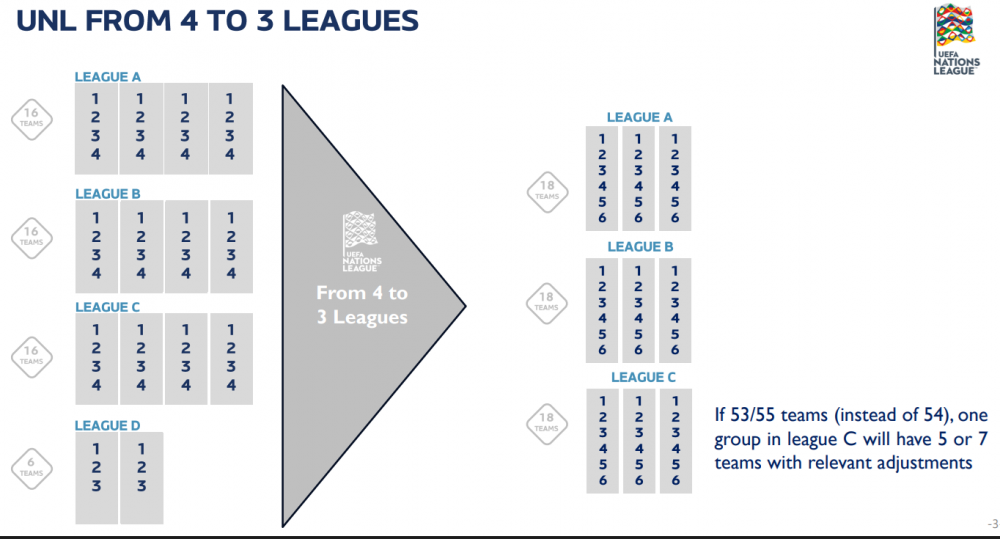
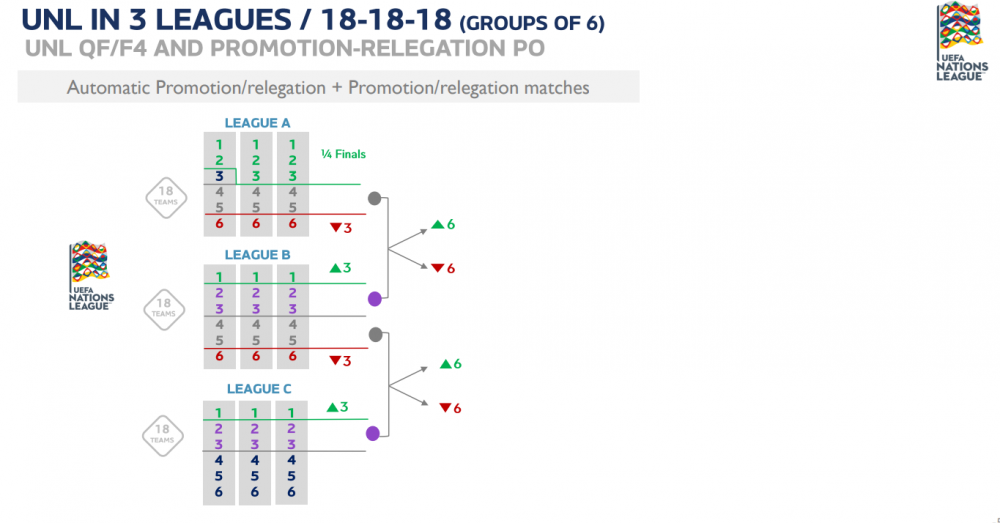
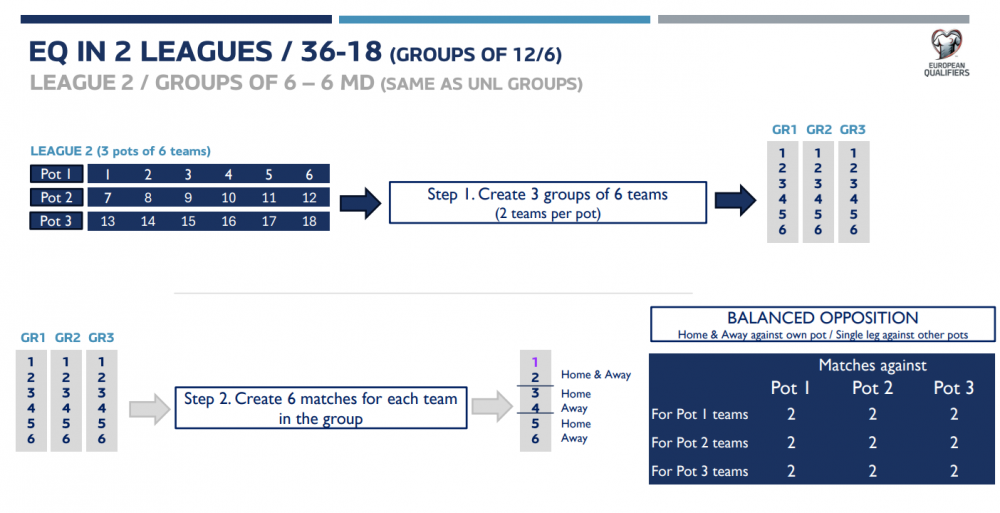
“In the new structure, the UEFA Nations League (UNL) will move, starting with the 2028/29 edition, from the current four leagues to three leagues of 18 teams. Each league will consist of three groups of six teams playing six matches against five different opponents: home or away against teams from different pots, and home and away against opponents from the same pot. With 55 teams participating, League C, which will start earlier than the others, will consist of a group of seven teams. The quarter-finals, the final four, and the promotion and relegation play-offs will complete the format without changes.
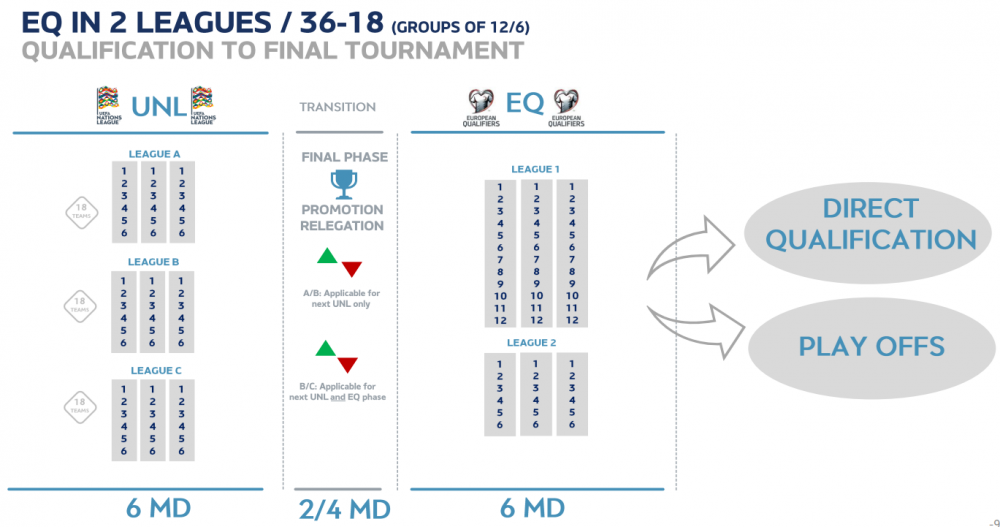
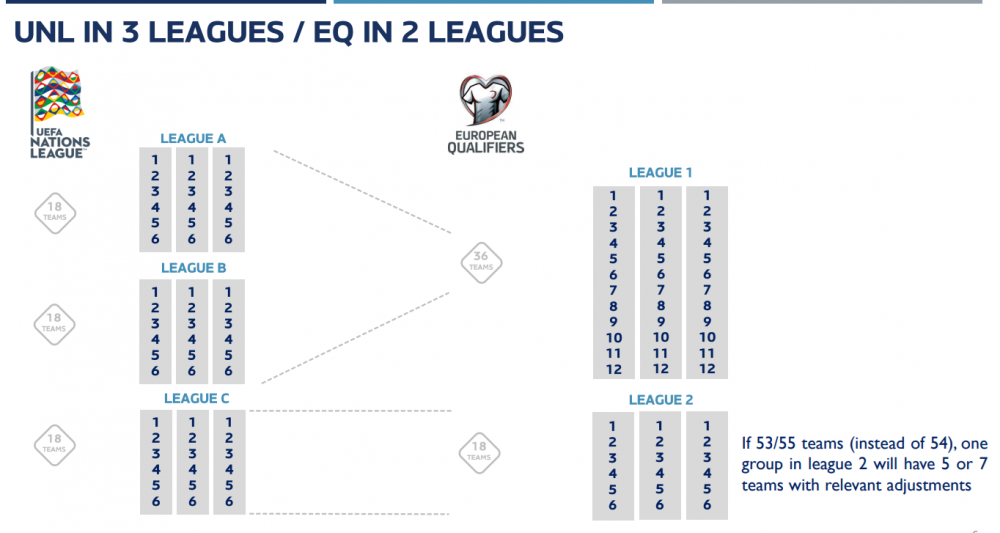
The European Qualifiers will adopt a similar structure: League 1, composed of the 36 teams from Leagues A and B of the UNL, and League 2, composed of the remaining 18 (or 19) UNL teams. In League 1, there will be three groups of Twelve teams will be drawn from three pots of twelve teams each. Each team will play six home or away matches against six different opponents, two per pot, similar to the format of UEFA club competitions. League 2 will be organized exactly like UNL League C, with three groups of six (or one group of seven).
“This will ensure fair qualification opportunities for League 2 teams as well.”
Although they will qualify directly for the final tournament, the host teams will participate in the European Qualifiers, which will determine their position in the following edition of the UEFA Nations League. The top-ranked teams from each League 1 group will qualify directly, while the remaining places will be allocated through a play-off system, ensuring fair qualification opportunities for League 2 teams as well.”
The idea is to ensure consistently interesting matches, drawing inspiration from the Champions League format (with single-leg ties rather than two-legged matches), but maintaining the divisions by Leagues to give smaller teams a better chance of qualifying for international competitions. The hope is that this will be a success and that the various qualifying rounds will be easier to follow than the current Nations League, which has caused considerable confusion on several occasions.
To aid understanding, UEFA has also provided visuals:
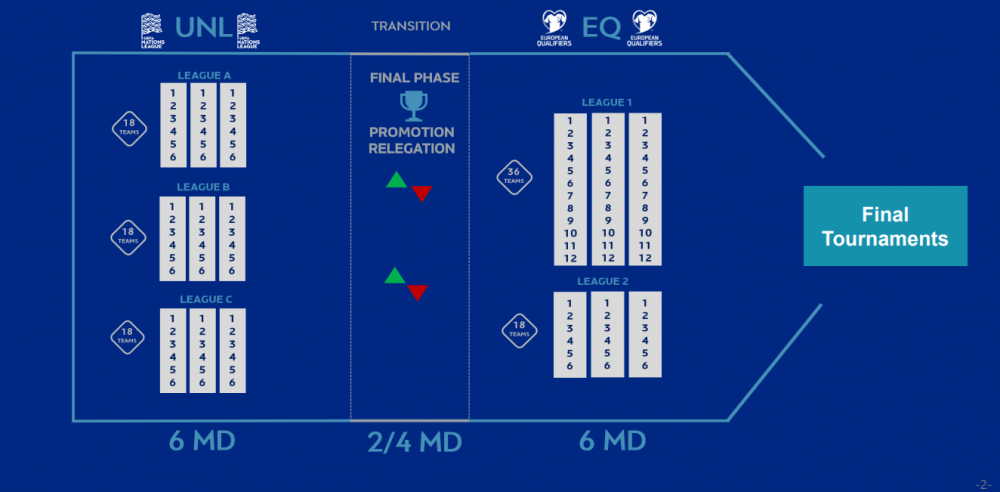
The overall format of the Nations League and European qualifying.
The reduction from 4 to 3 Leagues in the Nations League.
The creation of Leagues in the Nations League.
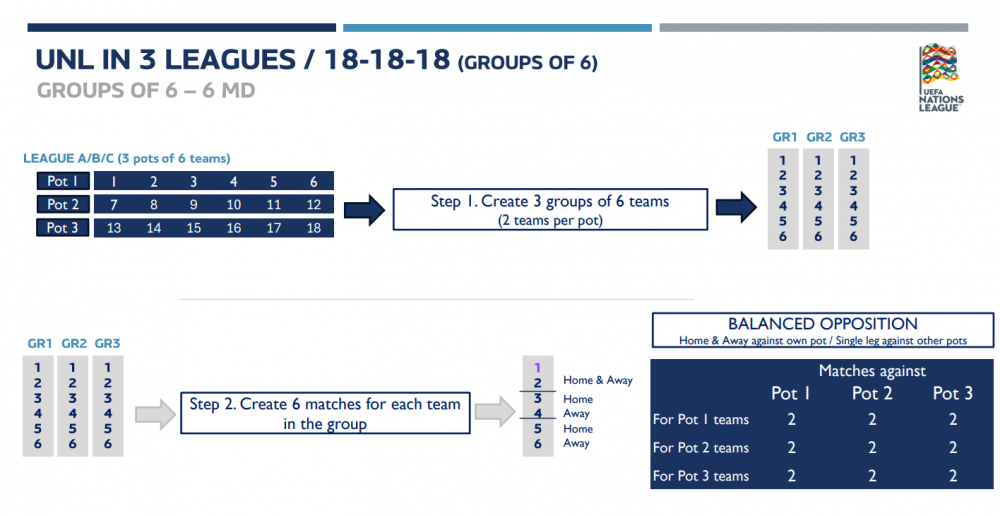
The promotion and relegation system in the Nations League.
From the Nations League to the Leagues in European qualifying.
European qualifying in 2 Leagues, divided into groups.
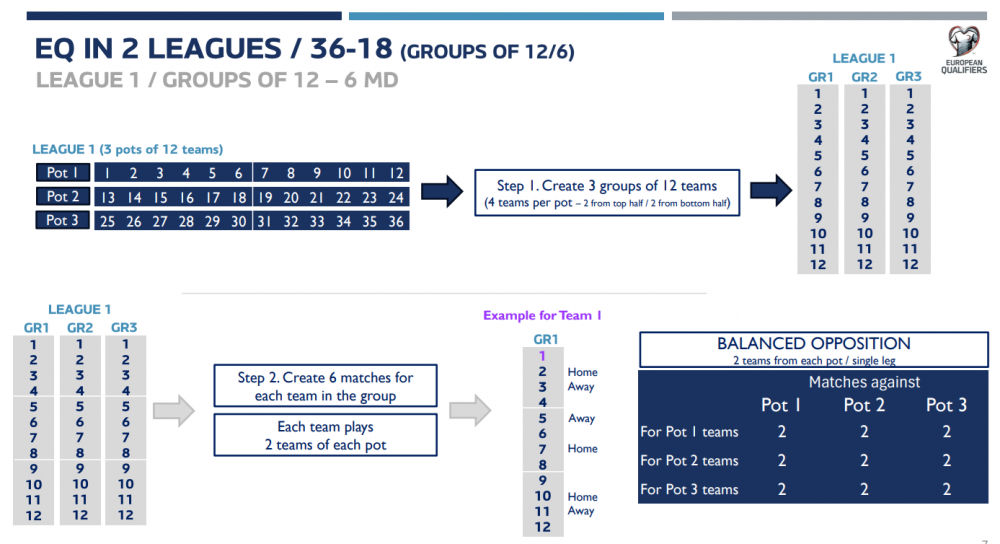
The formation of groups in European qualifying.
The qualification system for international competitions.