

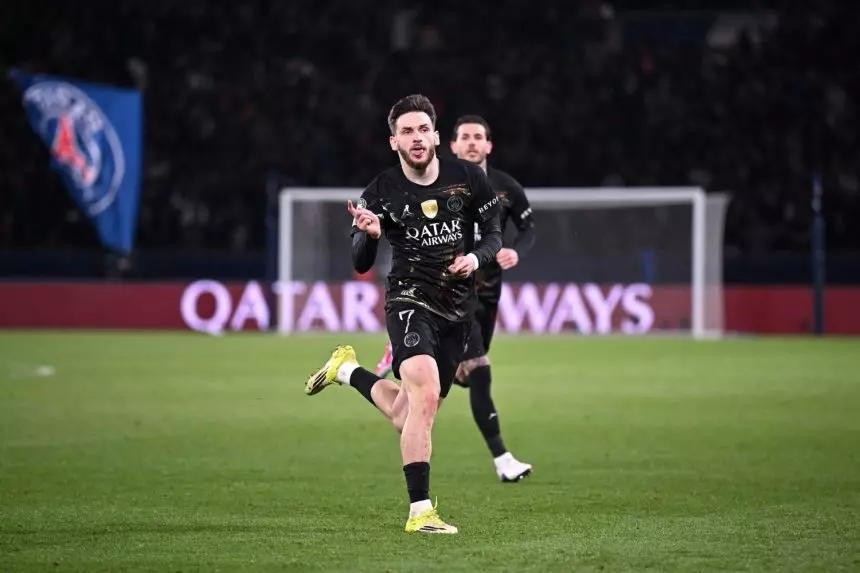
At Paris Saint-Germain, 25-year-old winger Khvicha Kvaratskhelia received strong praise after his performance. In Le Parisien, his friend and former teammate at Napoli, Cyril Ngonge, describes a player whose impact on matches is simply the logical extension of a very high level of commitment in his daily life.
Ngonge: “When I saw him come on, I told my best friend that Kvara was going to score.”
“When I saw him come on, I told my best friend that Kvara was going to score. His performance was extraordinary. But it doesn’t surprise me because I know his level of professionalism and his high standards off the pitch to achieve all that. What Khvicha does in training is even more impressive than in matches.”
Ngonge: “What I saw was a 25-year-old having fun.”
“What I saw was a 25-year-old having fun and enjoying himself immensely on the pitch. And when Kvara is like that, believe me, the first thing he can do is cause his opponents a lot of trouble.”
Cyril Ngonge’s testimony particularly highlights Khvicha Kvaratskhelia’s performance, elevating it beyond a mere one-off feat. The Georgian’s former teammate emphasizes a specific point: what he displays in public is almost less than what he produces in his daily work.
It is this perspective that amplifies the significance of his performance, because it doesn’t refer to an isolated moment of brilliance, but rather to a consistent pattern. By describing a player who is relaxed, happy, and completely immersed in his game, Ngonge also validates the idea that Kvaratskhelia becomes especially dangerous when he plays with freedom. The underlying message is clear: what the public witnessed was not a fluke, but rather the logical reward for a high level of professionalism.


