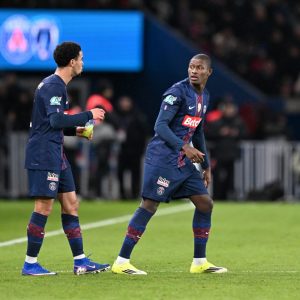

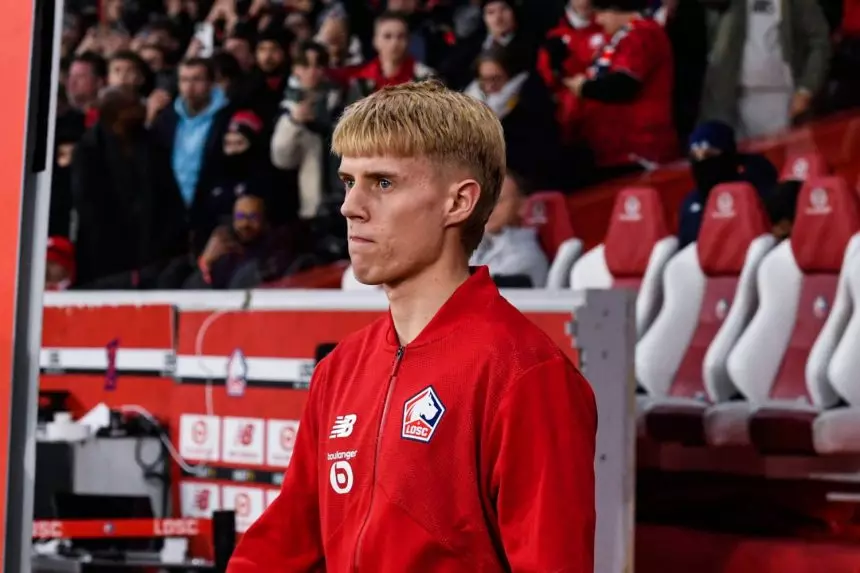
This Friday at 9 p.m. (CET), Paris Saint-Germain (2nd) faces Lille (4th) at the Parc des Princes for Matchday 18 of the 2025-2026 Ligue 1 season. In a press conference, Hakon Arnar Haraldsson, the 22-year-old Lille attacking midfielder, spoke about the upcoming match and their Parisian opponent.
Haraldsson: “It’s not necessarily a memory I want to dwell on.”
“If I remember correctly, we were down 3-0 after just 20 minutes. It’s not necessarily a memory I want to dwell on. I try not to think about it. We need to learn from this match, correct our mistakes, and resist PSG. If we want to get something out of there, we’ll have to do much better.
I think they’re the best team in the world.” They have fantastic players; they’re a very difficult team to play against. Their pressing is very intense and very high. In terms of ball retention, they’re second to none. We have to run a lot to win it back. They’re a team that makes their opponents suffer. The slightest mistake is punished severely against a team like that. We know it won’t be easy, but we’re going to give it our all. Also, because we haven’t had a good start to the year, we want to redeem ourselves.
Haraldsson: “I think we’ve given our opponents too many gifts.”
I think we’ve given our opponents too many gifts. It’s difficult to explain. There’s definitely a problem with concentration, the way we prepare, and perhaps just some lapses in attention. It’s true that it’s something I’ve rarely seen. For example, five red cards in six matches. We need to change things, to be more attentive. “
Haraldsson’s words serve as a salutary reminder. While Paris Saint-Germain is dissected under a microscope for every imperfect match, their opponents speak of a formidable machine. High pressing, constant intensity, ball control: the respect expressed by the Lille player is anything but polite; it’s pragmatic.
This PSG punishes every mistake, every second of inattention. And that’s precisely what Haraldsson emphasizes, far removed from the sometimes disconnected debates that erupt as soon as Paris wins “only” by one goal, or even worse, “loses a match.” The wariness displayed by Lille OSC contrasts with certain almost impatient media criticisms, as if the absolute demands erase the reality on the pitch. When the opponent speaks of the “best team in the world,” it’s not a slogan: it’s an observation forged in the suffering of past matches.”