

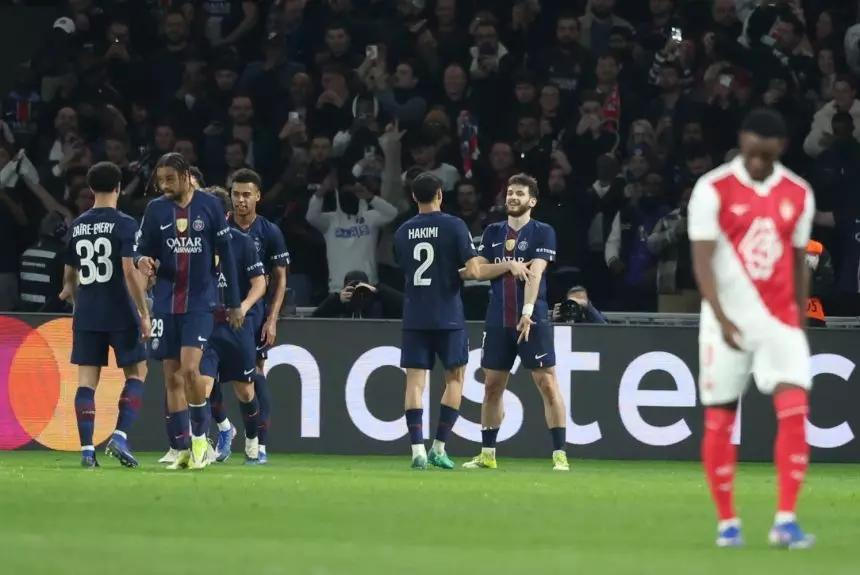
Paris Saint-Germain drew 2-2 against AS Monaco this Wednesday at the Parc des Princes in the second leg of their 2025-2026 Champions League playoff (5-4 on aggregate). After the match, former PSG coach Guy Lacombe shared his analysis with the newspaper Le Parisien.
Lacombe: “PSG isn’t yet at last year’s level”
“PSG isn’t yet at last year’s level, when they were truly exceptional. They’re missing a few players, there are some physical adjustments to be made, but above all, I think their opponents are starting to find effective ways to counter them. In the first half, Monaco really troubled Paris with Kvaratskhelia and Hakimi taking on defenders. This 5-3-2 formation, with Akliouche playing a free role, really caused Paris problems.”
Lacombe: “I think you always have to look at the opponent in these situations.”
How do you explain Paris’ lack of sharpness?
I think you always have to look at the opponent in these situations. And Monaco had a great first half. But you can see that things are missing; some players aren’t at the level they were last year. You can see that some players are unsettled; it’s part of the price of fame for a club that has reached the top. The hardest thing is to stay there.
Lacombe: “The players don’t have the same motivation.”
How can you do better next time?
You’ll see in the next match (laughs). Against Barcelona or Chelsea, there will be the great Paris, I’m convinced of it. There will be less calculation. You can see in some of their behavior that it’s not the same vigor, the same enthusiasm. Facing Monaco again, whom Paris already plays in Ligue 1, is a bit disheartening. The players don’t all have the same motivation, and you have to understand them; they’re only human.
From a manager’s perspective, Lacombe’s diagnosis points less to a Parisian “breakdown” than to a problem with control. Monaco is no sparring partner: in the first half, the 5-3-2 formation and the free-roaming Maghnes Akliouche locked down the passing lanes, double-teaming Khvicha Kvaratskhelia and constantly marking Achraf Hakimi’s runs. As a result, PSG produced some attacking play, but without a cutting edge, like a team still adjusting physically and finding its collective rhythm.
In this type of match, the question isn’t just “being better,” it’s about imposing the tempo, dictating attacking zones, varying the pace, and punishing defensive breaks. Paris has the quality to take the next step, but must prove it can reach that level on demand.
The interesting sign is that the countermeasure already exists: the more Paris is analyzed, the more they will have to live with the discomfort, accept being hampered, and then respond with internal solutions, rotations, complementary profiles, and above all, a higher standard of execution. Qualification is secured; the question now is the ability to switch into “European mode” without waiting for the match to demand it.