

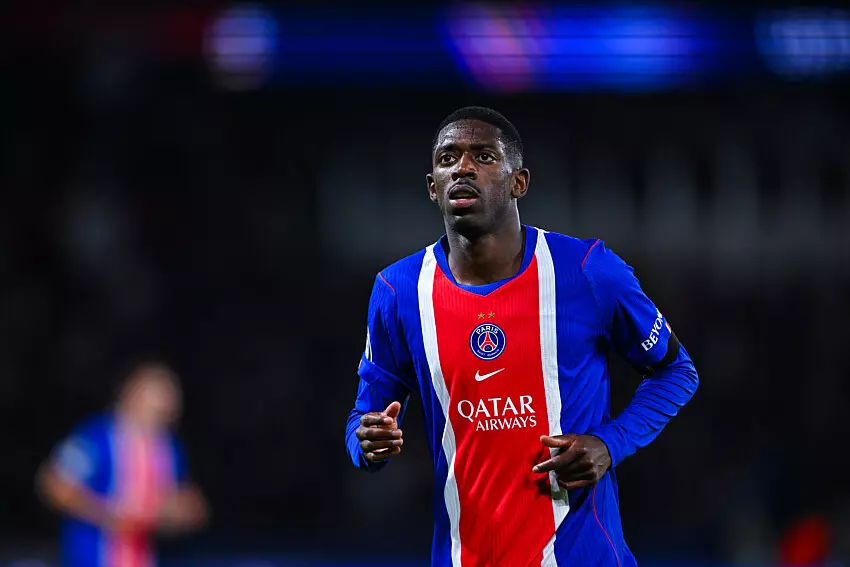
Nine missed penalties out of the last nineteen—including three in a row this season—show that Paris Saint-Germain has a decidedly complicated relationship with this particular skill. Yet, Paris frequently comes out on top in penalty shootouts, even going so far as to win a Champions League title. It is a paradox that warrants a deeper look, rather than being dismissed as a mere mental block.
One successful penalty out of four—that’s starting to become a real issue.
There are minor mishaps, occasional lapses, and rough patches—and then there are statistics that become downright embarrassing. With only ten penalties converted out of their last nineteen attempts during matches, Paris has a success rate barely above 50%. For a team capable of generating so much attacking play, this is a rather surprising weakness—and it’s hard to chalk it all up to bad luck.
This season, the problem has taken an even more concerning turn: only one successful penalty out of four attempts, and now three consecutive misses. Désiré Doué (21) against Le Mans, Ferran Torres (26) against Manchester City, and then Ousmane Dembélé (29) against Strasbourg—three different players, three misses in the span of a single week. The only Parisian to find the back of the net? Lucas Beraldo (22), against Le Mans. A central defender, serving as a reminder to the forwards that one’s position on the pitch offers no guarantees when standing at the penalty spot. At the very least, no one can accuse the Parisians of lacking variety.
Many candidates, but no true specialist.
This is precisely what Luis Enrique (56) acknowledges. The Parisian manager admits that he does not have a true specialist at his disposal and insists on the need to work on this aspect of the game. It is a clear-eyed assessment. But it also raises a question: by constantly rotating their penalty takers, are the Parisians depriving themselves of the benefits of established routine? A specialist is more than just a player with a knack for striking a ball; they possess specific habits, reference points, and experience—all of which can make the difference.
Of course, designating a primary taker would offer no guarantees; even the best specialists have their off days. But when misses start to pile up, having a wide variety of takers begins to look less like an asset and more like a perpetual, ongoing search for a solution. In this regard, it is hard to argue that PSG has found the right formula.
The paradox of a team that thrives under maximum pressure
And yet, Luis Enrique’s argument cannot be dismissed. Since December 2024, PSG has won six consecutive penalty shootouts. Their victims include Lens, Liverpool, Tottenham, Flamengo, Marseille, and—most notably—Arsenal in the 2026 Champions League final. Four of these shootouts resulted in the team lifting a trophy. Given this record, it is difficult to characterize the Parisian squad as a group of players incapable of handling pressure.
That is precisely what makes the situation so intriguing. PSG might falter when facing a penalty during the course of a match, yet prove formidably efficient when an entire competition hinges on a few kicks. It involves the same players, the same ball, and the same penalty spot—yet it is not quite the same exercise. And, crucially, it does not necessarily carry the same psychological weight.
The mental aspect explains a lot, but it isn’t everything
A penalty shootout relies on a unique collective dynamic. Players take turns, successes are countered by failures, and a goalkeeper can completely shift the momentum. Matvey Safonov (27), who made four saves against Flamengo in the Intercontinental Cup, provided a spectacular demonstration of this. PSG has, at times, emerged victorious despite several missed attempts—and not simply because their takers suddenly became flawless.
It would therefore be misleading to view these six wins as proof that the team has no trouble with penalties. On the other hand, they do illustrate a genuine capacity to handle decisive moments. Ousmane Dembélé showed this once again in Strasbourg: after missing a chance while Paris was trailing, he provided an assist for the equalizer before scoring the goal that put his side ahead. That kind of response speaks volumes more about character than any talk about “confidence” ever could.
Ultimately, the conclusion is quite simple: Paris possesses significant mental fortitude, even if they have yet to fully master a specific technical skill. Both realities can easily coexist. In fact, it would be a shame to reduce the character of this team solely to its performance from the penalty spot.
Winning despite one’s flaws shouldn’t preclude fixing them
It would be absurd to call for a total overhaul of a team that has just won two consecutive Champions Leagues. Yet, it would be equally strange to treat missed penalties as some sort of quirky, harmless feature of this PSG side. Nine misses out of nineteen attempts is no mere footnote—and three consecutive misses this season serve as a reminder that the problem remains unresolved.
PSG doesn’t necessarily need to sign a dedicated specialist or appoint a single, permanent penalty taker. Above all, they need to establish a more effective structure, put in the work on this specific skill, and be willing to challenge some of their established habits. Luis Enrique is right to highlight the mental strength of his squad. But this quality does not negate the need for technical precision. Paris has learned how to win even when missing penalties. The next step, quite simply, might be to learn how to score them.


