

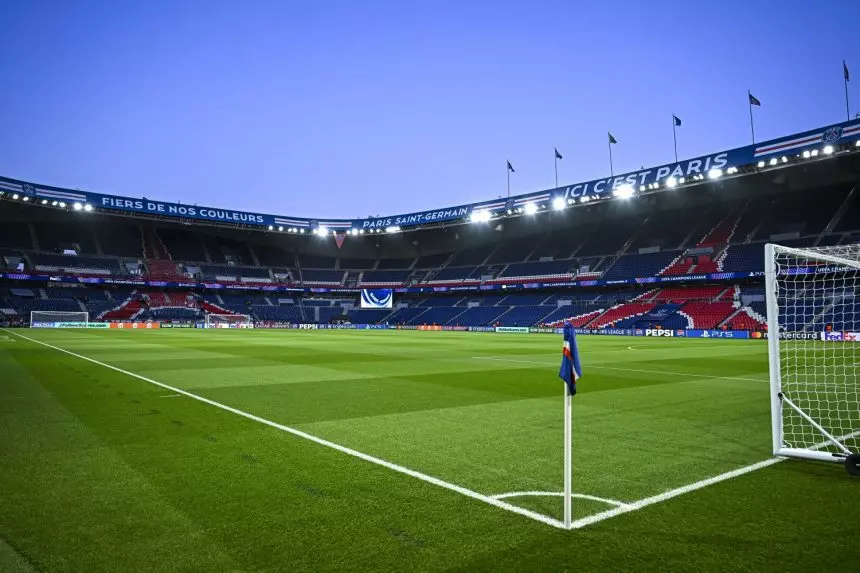
Emmanuel Grégoire, the mayor of Paris, has chosen to place the Parc des Princes issue at the heart of his early term. In a letter reported by Le Parisien, he now presents the future of Paris Saint-Germain as a major political, urban, and strategic challenge for the capital.
Grégoire: “It’s time to break the deadlock”
“It’s time to break the deadlock,” he writes. “Because the stakes are high. Without an agreement, the club is considering alternatives outside of Paris. I want to be clear: letting Paris Saint-Germain leave Paris would be a political, urban, and historical mistake. The departure of Paris Saint-Germain would be a considerable loss.” The mayor then lists the impact of a relocation on the economy, on sports, and also on the image and attractiveness of the capital.
Grégoire: “This transformation must not be solely about sports”
“This transformation must not be solely about sports,” he continues in his letter. “It must be urban, environmental, and social (…).” The project that will be developed will therefore aim not only to expand and modernize the stadium and redevelop its currently constrained surroundings, but above all to transform the Porte de Saint-Cloud into a true living district—open, welcoming, peaceful, and green—a new square in Greater Paris that will provide the most beautiful setting for the stadium.
The message sent is clear: Paris is no longer treating this matter as a simple negotiation between a city and its resident club. By explicitly linking PSG’s continued presence to the image, attractiveness, and urban balance of the capital, Emmanuel Grégoire acknowledges both the scale of the issue and the delays already accumulated.
Therein lies the complexity: it is not simply a matter of expanding the Parc des Princes, but of integrating this project into a much broader redevelopment of the Porte de Saint-Cloud, with urban, environmental, and social ambitions.
Above all, this statement reflects a form of political urgency, because Paris is no longer moving forward alone on this issue: the club is also looking towards Massy and Poissy, which completely changes the balance of power and now forces the town hall to act quickly, without simplifying such a complex matter.


